
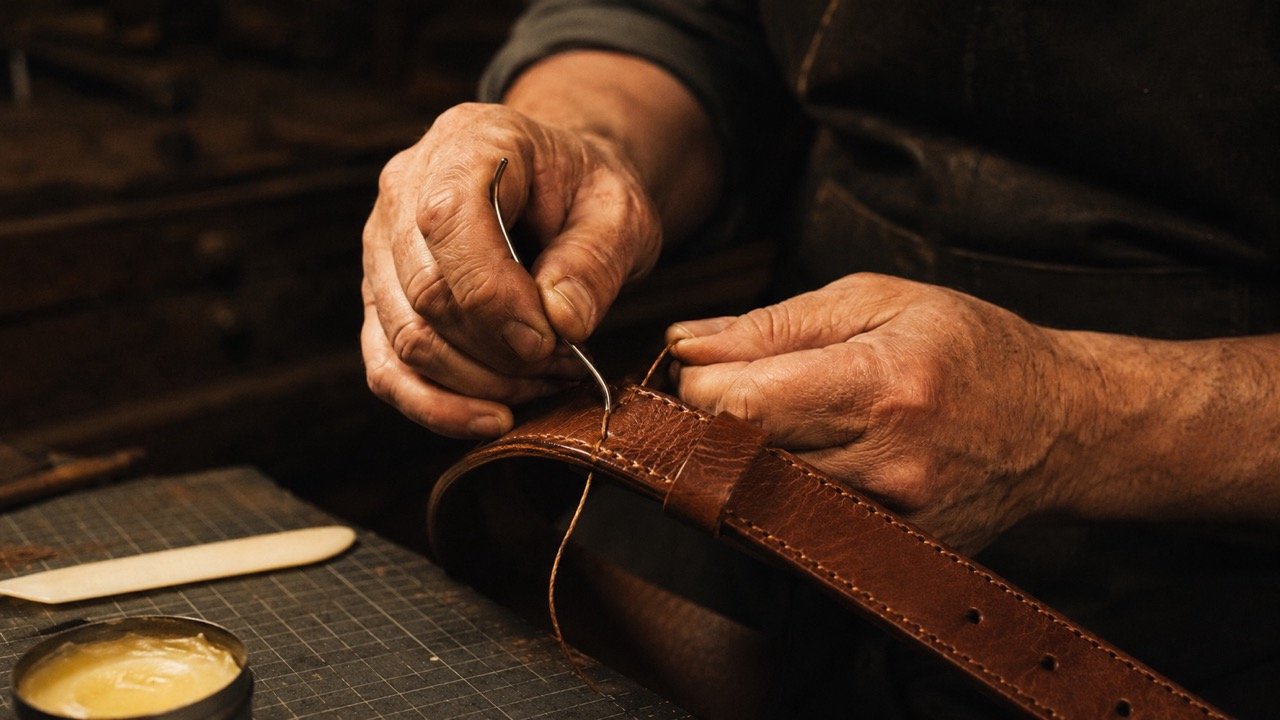
The appreciation of fine leather relies on a fundamental truth: a properly made leather object is one of the few things you can buy that looks significantly better after ten years of hard use than it did on the day of acquisition. This assumes, however, that the hide is of exceptional quality (full-grain, vegetable-tanned) and the construction is uncompromised (hand-stitched, solid brass hardware).
Australia has a deep historical relationship with leatherwork, born of equestrian necessity and pastoral isolation. Today, a small but dedicated group of artisans across Sydney and regional New South Wales is maintaining this tradition, producing briefcases, belts, and bespoke luggage that rival the finest European houses in durability and character, while retaining a distinctly Australian ruggedness.
R.M. Williams Bespoke, Sydney CBD
It is impossible to discuss Australian leather without addressing R.M. Williams, but the focus here is specifically on their bespoke room at the George Street flagship. While their ready-to-wear boots are internationally recognized, the bespoke service allows for a level of customization and fit that elevates the boot from a premium purchase to a lifetime commission.
The process involves exact foot measurements and a choice of exotic and premium leathers — from burnished crust leathers to saltwater crocodile. The construction remains the brand’s signature single-piece upper, requiring exceptional skill to shape over the last. For the client who requires a dress boot with the durability of workwear, the bespoke Craftsman is the definitive Australian footwear investment.
George Street, Sydney. By appointment.
Wootten, Online and by Appointment
Though based in regional Victoria, Wootten’s reputation has made them the default commission for Sydney’s most discerning leather buyers. Founded in the 1970s and now run by second-generation cordwainer Jess Cameron-Wootten, the workshop produces bespoke footwear and leather goods entirely by hand.
Their custom bags — particularly the overnight duffels and structured briefcases — are built using heavy-weight, vegetable-tanned bovine leathers that possess a stiffness requiring genuine breaking in. The hardware is solid brass, the stitching is saddle-stitched by hand (a technique that will not unravel if a single stitch breaks, unlike machine stitching), and the finish is unapologetically robust. A Wootten bag is not lightweight luxury; it is architectural permanence.
Billy Tannery and the Kangaroo Leather Revival
For decades, Australia’s kangaroo leather industry exported raw hides for finishing overseas — the value extracted elsewhere, the craft surrendered. Billy Tannery reversed that equation. The Canberra-based operation is now the only dedicated kangaroo leather tannery in Australia producing chrome-free, traceable hides from animals harvested under the national management program, finished to a standard that competes with the finest European tanneries.
The material warrants the connoisseur’s attention. Kangaroo hide is pound for pound the strongest leather in the world — with a tensile strength exceeding bovine hide at a fraction of the weight — because its fibres run uniformly parallel to the surface throughout the entire skin, unlike cowhide where deeper fibres angle away. This structural consistency makes it the correct material for a belt or watch strap that must genuinely last a lifetime without stretching or cracking at the stress points.
Several Sydney-based artisans commission directly from Billy Tannery, producing hand-stitched belts, card holders, and fine accessories for private clientele. The hand-plaited kangaroo belt — a form historically associated with Australian stockmen, where multiple strands of hide are braided over a solid core — has been revived by independent makers who understand both its heritage and its material superiority. To source commission work: approach the bespoke tailoring houses on Martin Place or in Surry Hills, who maintain relationships with the city’s finest leather workers and will broker the introduction.
The Care and Maintenance of the Hide
An object built to last a century requires a caretaker. The degradation of fine leather is almost always the result of neglect — specifically, the drying out of the natural oils within the skin.
The Routine: A vegetable-tanned leather briefcase or belt requires conditioning twice a year. Use a high-quality, natural leather conditioner (avoid anything containing silicone or petroleum distillates). Apply it sparingly with the fingers — the warmth of the hands helps the leather absorb the fats — and allow it to sit overnight before buffing with a horsehair brush.
The Patina: Do not fear scratches, water marks, or the darkening of the leather where your hands touch it. This is the patina, the visual record of the object’s life with you. To attempt to keep vegetable-tanned leather looking ‘new’ is to misunderstand the material; its beauty lies entirely in its aging.