
Sydney does not do enough with its architectural inheritance. The Opera House — Utzon’s extraordinary, contentious masterwork — absorbs so much of the city’s architectural attention that the buildings surrounding it, and the buildings scattered across ninety kilometres of suburb and foreshore, receive a fraction of the engagement they deserve.
This is a guide to looking up. And sideways. And occasionally down into the places where the city’s architectural ambition expressed itself quietly and without acknowledgement, in staircases, vestibules, markets, libraries, and private residences that contain work of genuine international significance.
The MLC Centre, Martin Place: The Brutalist Tower Done Right
Architect Harry Seidler completed the MLC Centre in 1977, and the building has been generating the particular response reserved for serious Brutalism ever since — admiration from architects, bafflement from the general public, and a growing recognition from a generation that has learned to see the heroic ambition in concrete and to forgive it the excesses of its decade.
The tower itself — fifty floors of white reinforced concrete and reflective glass — is not the main event. The main event is the podium: the stepped public plaza at the base, with its precast concrete surfaces and the relationship between tower and street that Seidler negotiated with the kind of urban generosity that has largely disappeared from commercial development. The theatre precinct on the lower floors, now occupied by a range of tenants, contains some of the most spatially adventurous foyer architecture in the city.
Come in late afternoon, when the sun comes around the corner of Martin Place and rakes across the concrete surface of the podium. The shadows produced by Seidler’s stepped geometry at that particular hour are among the best things to see in the CBD.
Martin Place, Sydney CBD. Public access to the plaza. Tower entry by business access.
The State Library of NSW: The Mitchell Wing
The Mitchell Library building — completed in 1910 as an extension to the original 1845 Australian Library of New South Wales — contains one of the most beautiful interiors in Australia and is visited by a fraction of the people who visit the Opera House.
The reading room: a barrel-vaulted space of extraordinary proportion, top-lit through a glass ceiling, lined with dark timber shelving that reaches the full height of the walls. The silence is institutional but not cold — it is the silence of accumulated knowledge, of a room that has been used for serious reading for more than a century.
The mosaic in the entrance vestibule — depicting Matthew Flinders’ circumnavigation of Australia, completed in 1802 — is a piece of early twentieth-century decorative art of the highest quality. It receives approximately three hundred seconds of attention per year from visitors who are moving through to something else.
The library runs free public gallery exhibitions that provide legitimate access to the building for those without research credentials. Check the programme; the quality of exhibitions in the Mitchell Gallery consistently exceeds what the general public assumes a state library produces.
Macquarie Street, Sydney CBD. Free entry to public areas. sl.nsw.gov.au
The Anzac War Memorial, Hyde Park South
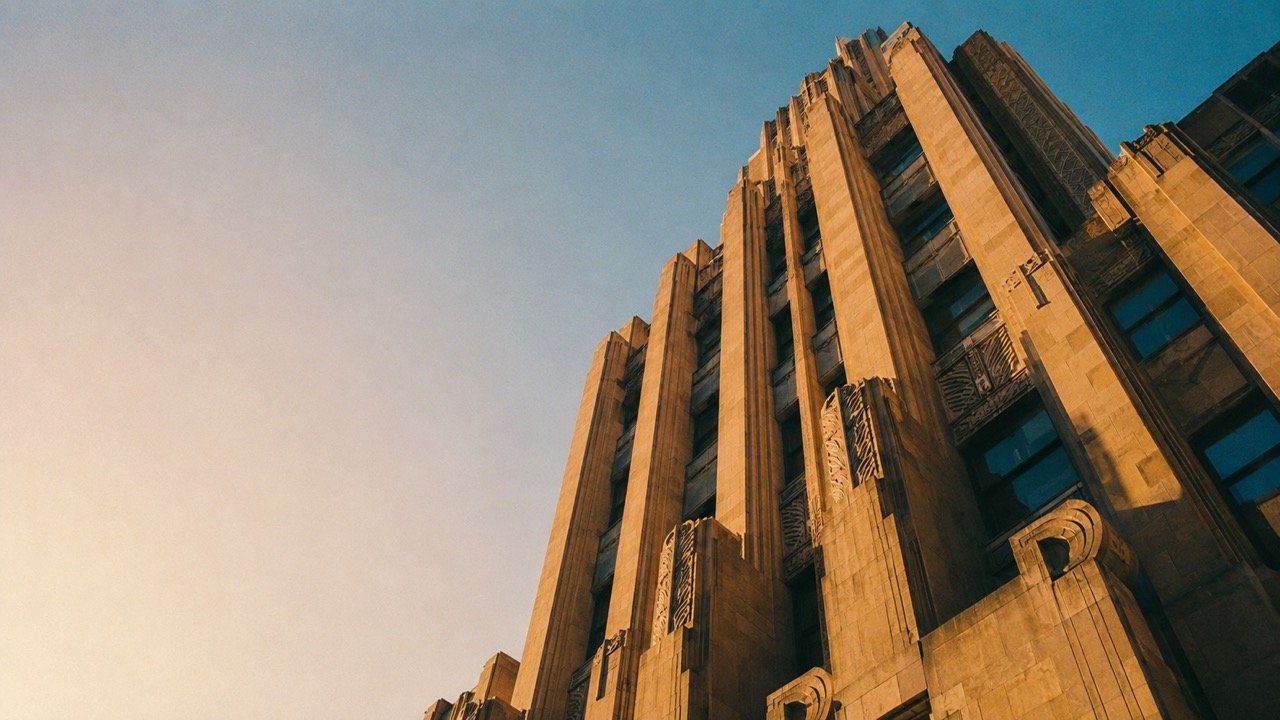
Emil Sodersten won the competition for the Anzac War Memorial in 1930 with a design that has aged into something that its Art Deco contemporaries largely did not: genuine gravity. The building is not impressive in the conventional sense — it does not attempt to overpower. It attempts to hold.
The exterior, in New South Wales pink granite, draws the eye upward through a series of setbacks that build from the ground level like a compressed ziggurat. The interior is the revelation: a circular Hall of Memory containing the Sacrifice sculpture by Rayner Hoff, a horizontal bronze figure of a soldier lying on a shield held aloft by three women — his mother, wife, and daughter. The pool at the base reflects the ceiling dome and the natural light admitted through the oculus.
The Memorial is among the finest pieces of civic architecture in Australia and is almost never described as such. Visit on a weekday morning when the building is quiet enough to hold the silence Sodersten designed it for.
Hyde Park South, Sydney CBD. Free entry. anzacmemorial.nsw.gov.au
Paddington Town Hall, Oxford Street
The Paddington Town Hall was completed in 1891 in a style that Victorian-era Sydney favoured for its civic buildings: Italian Renaissance, executed in local sandstone, with a clock tower that reads well at any distance. The exterior is handsome. The interior is exceptional.
The main hall — now used for events and live performance — retains the full volume of its original design: high ceilings, ornate plasterwork, a timber floor that has been in continuous use for 130 years. The acoustic properties, which were not intentional in any scientific sense, are remarkable — a spoken voice carries across the room with an intimacy that modern acoustic engineering rarely achieves in a space of this size.
The building is accessible for events; the Paddington Markets, held in the grounds on Saturdays, provide access to the exterior. For internal access, the town hall is bookable for private events, and several performance companies use it regularly for concerts and recitals that the public can attend.
Oxford Street, Paddington. External access via Paddington Markets (Saturdays). Events calendar at paddingtonmarkets.com.au
Australia Square, George Street: Utzon’s Other Building
The Opera House consumes the entire Utzon narrative, which means that Australia Square — completed in 1967, nine years before the Opera House — receives almost no attention in the standard architectural itinerary. This is a significant oversight.
Australia Square is a cylindrical office tower designed by Harry Seidler (not Utzon — a confusion worth clearing), but the building’s podium and public plaza contain concrete work of a quality that places it firmly in the first rank of mid-century modernist commercial architecture. The curved concrete ramps of the car park entry, the proportions of the public arcade at ground level, and the relationship between tower and plaza represent the apex of Seidler’s urban design thinking.
The Gold Fields House opposite, and the AMP Centre to the north, complete a cluster of 1960s commercial towers that represent a concentrated moment of architectural ambition in the CBD that has never been adequately assessed as a unified urban sequence.
George Street, Sydney CBD. Public access to the plaza.
The Rose Seidler House, Wahroonga: By Appointment
In 1950, Harry Seidler — recently arrived from postwar Europe via Walter Gropius and Marcel Breuer at Harvard — completed a house for his parents in the Sydney suburb of Wahroonga that placed European modernism in dialogue with the Australian landscape in a way that no building in Australia had previously attempted.
The Rose Seidler House is now owned by the Historic Houses Trust of NSW and is open to the public on Sundays and by prior arrangement on other days. The visit — guided, necessarily, given the building’s significance and the care required — takes approximately ninety minutes and includes access to all principal rooms as Seidler designed them, furnished with the period modernist pieces the family used.
The garden setting — the building sits in bushland on a sandstone ridge — provides the landscape-architecture dialogue that is central to understanding the design. The louvres, which Seidler developed specifically for the Australian sun, are best understood in the afternoon, when the light comes in at a low angle and the system does exactly what it was designed to do.
71 Devlins Creek Road, Wahroonga. Open Sundays 10am–4pm. sydneylivingmuseums.com.au
This guide is arranged as a self-directing itinerary through publicly accessible buildings. Private or appointment-only access is noted where applicable. The buildings listed represent a selection from a much larger body of significant architectural work across the greater Sydney region — a complete guide would require considerably more room than this.