
The best meal served in Sydney on any given evening is served at a private address. This is not a romanticised claim about domestic cooking; it is a practical observation about the conditions in which extraordinary food gets made. The serious home cook, working without the constraints of a commercial kitchen — without labour costs, without standardisation requirements, without the need to produce the same dish identically fifty times a service — is free to cook as they actually want to cook. The fish is from this morning’s market visit. The stock has been on for two days. The pasta was made this afternoon. The wine is from the cellar, not the by-the-glass list.
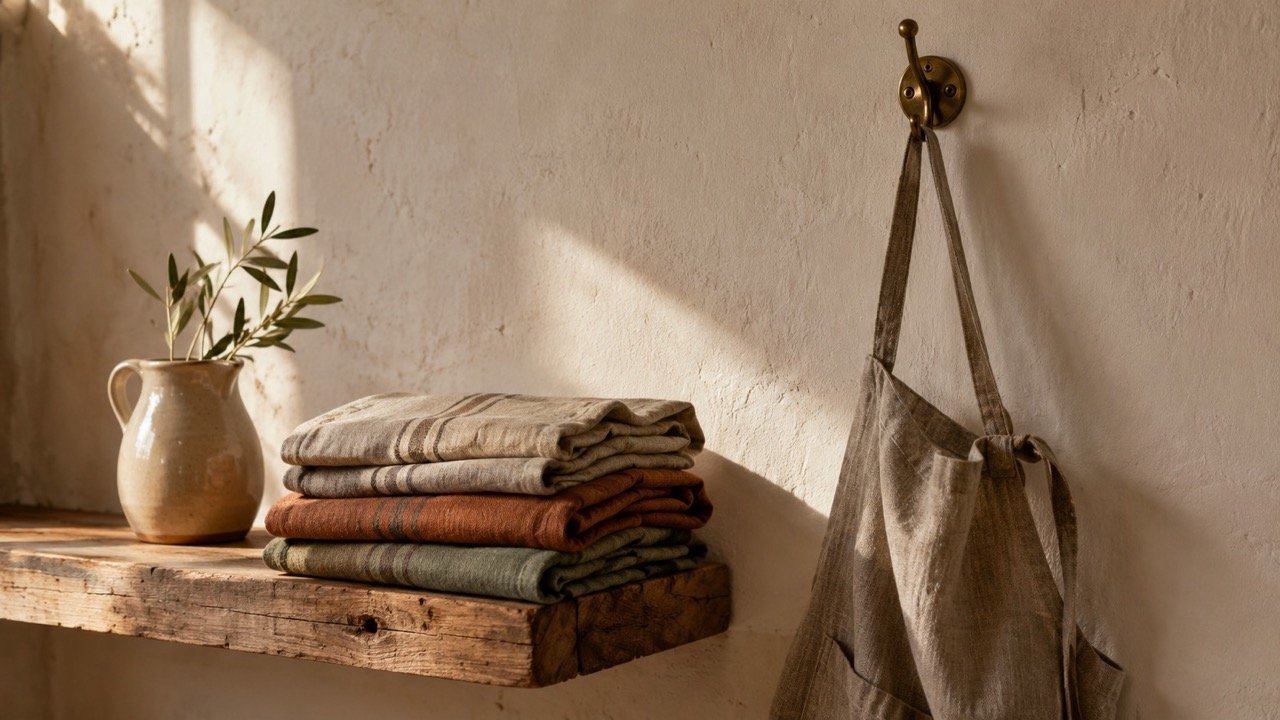
This is not a cooking style available to beginners. It is the product of deliberate skill acquisition over years, of the kind of equipment investment that a serious musician makes in their instrument, and of a philosophical commitment to the kitchen not as a place where food is prepared but as a space in which craft is practised. The apron, in this context, is not a protective garment but a statement of intent: I am here to do something difficult, repeatedly, until I do it properly.
Sydney provides serious resources for this kind of cooking, in the form of schools that teach at the level of technique rather than recipe, specialist retailers who supply what professional kitchens use rather than what department stores carry, and a community of cooks who understand that the private dinner party at the highest level is among the most refined social forms available in this city.
Sydney Seafood School: The Deepest Curriculum in Australian Cooking
The Sydney Seafood School, located within the Sydney Fish Market complex at Bank Street, Pyrmont, is the most important cooking school in Australia for one irreducible reason: it sits above the country’s largest fish market, operates within a culture of genuine piscine expertise, and runs classes taught by working chefs from the city’s best restaurants. The market below is not incidental; it is the point. Understanding seafood cookery begins with understanding seafood selection — the difference between a fish bought this morning and a fish bought two days ago, the way a live crayfish should behave, the specific gill colour that signals freshness in a Sydney rock oyster — and this school provides both the sourcing context and the cooking instruction in the same building.
The school’s guest chef masterclass programme has brought in some of the most significant cooks in the country: Clayton Wells, whose resume spans Quay, Tetsuya’s, and Momofuku Seiobo; Christine Manfield, whose understanding of spice and heat remains among the most sophisticated in Australian cooking; Matthew Moran, whose work with Australian produce across twenty years of Aria has produced a body of knowledge about this particular coastline’s flavours that few can match. A masterclass here is not a celebrity cooking demonstration; it is a working session in which a professional shares specific, transferable technique with an audience prepared to use it.
For those who want to engage at the level of pure skill — filleting, curing, cold-smoking, the preparation of live crustaceans — the school’s technique classes provide the foundation that the masterclasses presuppose.
Sydney Fish Market, Bank Street, Pyrmont. sydneyfishmarket.com.au/Sydney-Seafood-School
Chef’s Armoury: The Equipment Conversation
At 105-107 Percival Road in Stanmore — one minute from Stanmore Station, in a space that shares the suburb with Sixpenny — Chef’s Armoury opened in 2007 as the first Japanese knife retailer in Australia and remains the most serious specialist kitchen supply destination in the country. The Stanmore store’s display of Japanese chef’s knives is not comparable to the knife section of a kitchenware chain; it is a collection of objects, each with a specific lineage, a specific maker, a specific steel and forging method, and a specific relationship to a style of cookery.
The gyuto — Japan’s answer to the French chef’s knife — is the starting point for any serious kitchen, and the range runs from entry-level Tojiro at several hundred dollars to single-forged Nakaya with hand-shaped ebonite handles at prices approaching investment-grade art. The correct knife for most home cooks is somewhere in the middle: a 240mm gyuto in white steel or VG-10, with a maker’s mark that represents generations of bladesmith expertise. The store’s staff know this material the way a good wine merchant knows their cellar — by taste, by character, by the match between knife and cook.
Beyond knives, the cast iron and Japanese cookware at Chef’s Armoury includes yukihira saucepans, nabe pots, and iron skillets that represent the same philosophy as the knives: form derived from centuries of use, material chosen for its specific properties rather than its appearance, weight and balance calibrated for professional use. A single proper Japanese cast-iron pan will outlast five generations of non-stick cookware and produce a sear that those pans cannot approach.
105-107 Percival Road, Stanmore. Also at Artarmon. chefsarmoury.com
Knives and Stones, St Peters: The Professional Edge
A different register of knife culture is available at Knives and Stones in St Peters — a shop that approaches the Japanese knife tradition from the sharpening perspective as much as the acquisition perspective. The central argument here is that a mediocre knife maintained to perfection will outperform an extraordinary knife neglected; the whetstone curriculum that the shop represents places equal weight on the knowledge of how to care for a blade as on which blade to choose.
Sharpening on Japanese whetstones is itself a practice requiring instruction. The progression from coarse grit to medium to finishing stone, the angle geometry that determines the final edge profile, the feedback of the steel against the stone that tells an experienced sharpener what is happening at the microscopic level: these are craft skills with a learning curve measured in months. Knives and Stones carries the full range of Japanese whetstones from Shapton through to the natural Ohira Suita and Nakayama finish stones that represent the summit of sharpening abrasives, and the knowledge of how to use them is part of what the shop sells.
St Peters, Sydney. knivesandstones.com.au
The Private Dinner Party as Social Form
The serious home dinner party is a compositional challenge more demanding than producing a restaurant meal, because the constraints are different. There is no brigade — the cook is the sommelier is the server is the host. There is no commis to handle mise en place. The menu must be designed so that nothing requires attention at the table: the first two courses capable of being plated in advance, the main course with a rest period that gives the cook time to sit with guests, the dessert ready before service begins.
The rule that Sydney’s most accomplished home cooks observe is this: the kitchen should be empty before the first guest sits down. Any cook still working during dinner has planned incorrectly. The preparation is the cooking; the service is the conversation.
The specific protocols worth observing:
Mise en place is not optional. Everything measured, prepped, and ready to assemble before the first guest arrives. A professional kitchen does not improvise at the moment of service; neither should a serious home cook.
One genuinely extraordinary dish per meal — the rest of the menu supporting it rather than competing. A tasting menu of ten courses at home exhausts both the cook and the guest.
The wine service belongs to someone with knowledge. If the cook is in the kitchen, the wine is being poured incorrectly. Designate a guest, or accept that the simplest solution is to open everything before service and let the table pour.
The apron comes off before you sit down. You are a cook before dinner; you are a host during it.
On Why This Matters
The private kitchen is the space in which the love of cooking is most purely expressed — not for service, not for review, not for anyone’s approval but the table’s. The tools with which you cook are the instruments of this expression, and they deserve the same consideration that a musician gives to their instrument or a craftsperson to their tools. A properly balanced Japanese knife, a well-seasoned iron pan, a heavy wooden board: these are not luxury objects. They are the means by which serious cooking becomes possible, and the pleasure of working with them, night after night, is one of the quieter and more reliable satisfactions available in a domestic life.