
Daylesford arrived at its current identity the way that places which have genuinely found themselves always do: through accumulation rather than planning, through the successive waves of people who came for one thing and stayed for another, and through the lucky circumstance of a natural resource — mineral springs — that required nothing more sophisticated than a glass and a level of geological curiosity. The springs were known to the Dja Dja Wurrung people long before European settlement, and European settlers recognised the commercial potential within decades of arrival: by the 1880s, the area around Hepburn Springs was a fashionable spa destination with bathhouses, hotels, and a railway connection from Melbourne.
The Daylesford of the current era has layers accumulated over 140 years: the spa tradition (the oldest surviving bathhouse in Australia), a significant LGBTQ+ community that arrived in the 1970s and 1980s and established the arts culture, a food-and-wine ecosystem of farmers’ markets and serious restaurants, and a visual arts presence that makes the weekend drives through the back roads between Daylesford and Hepburn Springs and Trentham feel like a tour through a particular kind of late-twentieth century rural cultural ambition. What makes Daylesford interesting rather than merely pleasant is the coherence: these layers have settled into something with its own identity, not a spa destination with artisan adjuncts, but a small town that happens to have mineral springs and very good food and a bathhouse that has been operating since 1895.
Hepburn Bathhouse and Spa
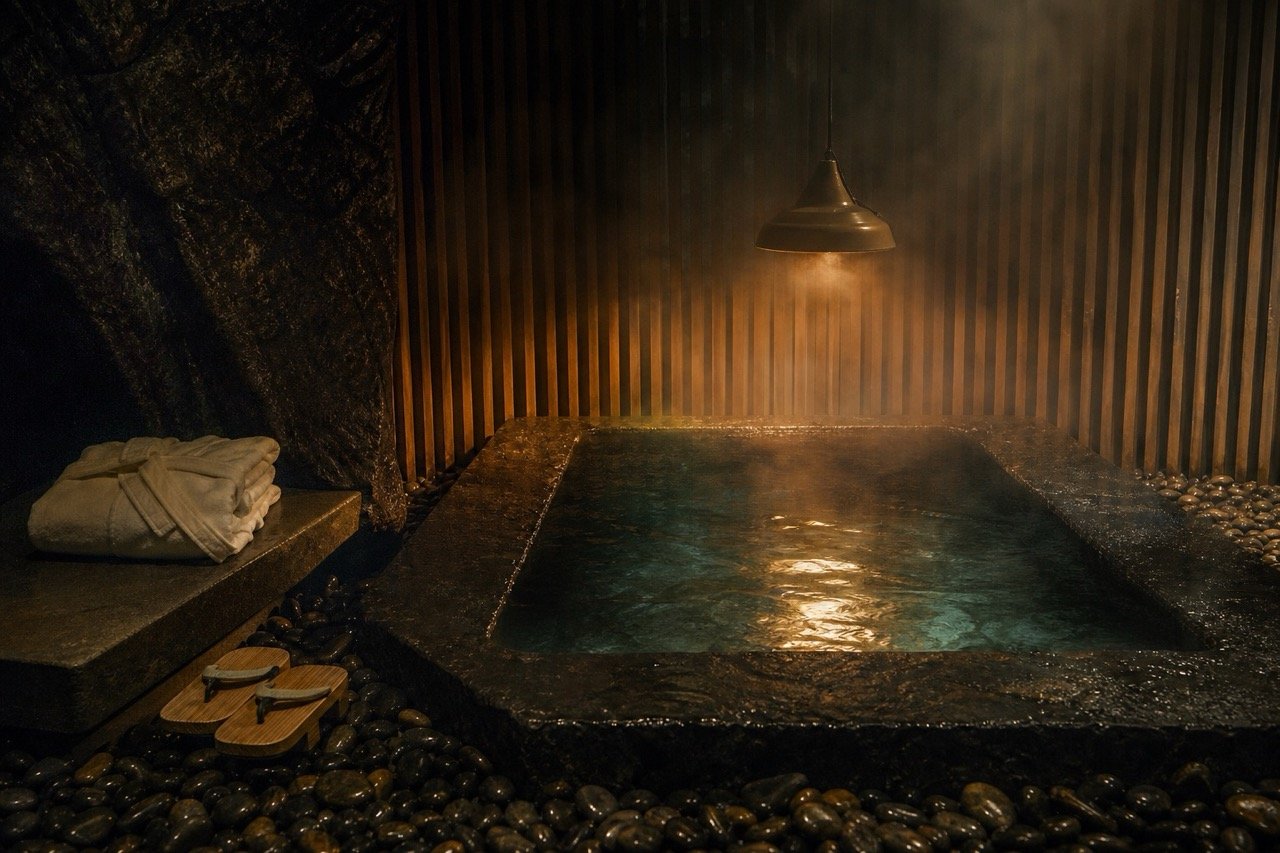
The original bathhouse at Hepburn Springs opened to the public in 1895 — the year before the Federation and before wellness had been theorised as a commercial category — and the structure is still there, heritage-listed, now serving as the Hepburn Pavilion Café. The contemporary Hepburn Bathhouse and Spa, which opened in 2009 on the adjacent site at Mineral Springs Reserve, manages the difficult task of a modern spa facility in a heritage context with genuine architectural seriousness: the main bathing pool is a substantial indoor space with high clerestory windows, the water drawn from the same mineral springs that fed the original baths, naturally carbonated and mineralised in the way of the specific geology of this section of the Great Dividing Range.
The minerals in the Hepburn Springs water — calcium, magnesium, sodium bicarbonate, in concentrations that vary between springs — are the same minerals that made the area medically fashionable in the nineteenth century, when hydrotherapy was mainstream rather than alternative medicine. Whether the specific pharmacological effects are what proponents claim is, depending on your relationship to evidence, either irrelevant or the primary question. What is not in dispute is the quality of lying in warm mineral water in a quiet room while the temperature outside is eight degrees, which does not require endorsement.
Mineral Springs Reserve, Hepburn Springs. hepburnbathhouse.com. Book in advance — weekends fill.
Lake House
Lake House at 4 King Street, on the edge of Lake Daylesford, opened in 1984 and has been a benchmark of regional Victorian cuisine for longer than most of the country’s current food culture has existed. Alla Wolf-Tasker, who built the restaurant and the hotel with her late husband Allan, has been cooking from the garden and the surrounding region since before farm-to-table had a name, and the restaurant’s current form — a serious wine list, a menu that changes with the garden, a dining room with views across the lake — reflects forty years of refinement rather than renovation.
The hotel accommodation — 33 rooms across the main house and stone cottages on the property — makes Lake House a destination rather than a lunch stop, and the morning quality of the property, when the mist sits on the lake and the garden is wet and the breakfast arrives in a room that looks across water, is its most honest hour. Book the Lake House and stay two nights; the cost is significant and the alternative, which is a day trip from Melbourne for lunch and a return drive in the dark, is a lesser version of the experience the place is designed to provide.
4 King Street, Daylesford. lakehouse.com.au.
Sault Restaurant and the Saturday Market
Sault Restaurant, at 2349 Ballan-Daylesford Road in Sailors Falls — five minutes from Daylesford on the road toward Ballan — sits on a 125-acre property with kitchen gardens that supply the menu and vineyard rows that supply the table wine. The building is low and modern in the landscape rather than against it, the garden terraced on the slope above the dining room, and the cooking — contemporary Australian, serious about provenance — treats the region’s produce with the respect appropriate to a restaurant that is, functionally, a farm that has taken cooking seriously.
The Saturday organic market in Daylesford’s main street, held weekly and largest in summer, operates as a reliable audit of the regional food culture that makes Sault and Lake House possible: biodynamic vegetable growers, small-flock poultry, goat cheese from farms within twenty kilometres, preserves and ferments from the area’s serious home producers. Buy the things that won’t travel well — the fresh bread, the ripe tomatoes in autumn, the flowers — and take the harder things home. The market and a late breakfast at a cafe on Vincent Street constitutes the correct Saturday morning before an afternoon at the bathhouse.
Sault: 2349 Ballan-Daylesford Road, Sailors Falls. sault.com.au. Daylesford Saturday market: Vincent Street, Daylesford, year-round.
A Note on the Town’s Character
Daylesford rewards the visitor who is willing to move at the speed the place actually operates — which is slightly slower than Melbourne, slightly more deliberate, with more time spent in conversation and less in transit. The arts infrastructure is real: independent galleries, a cinema, the Wombat Hill Botanic Gardens above the town with views across the valley. The drive from Daylesford to Trentham through Creswick follows back roads through paddocks and she-oak forest that reward an unhurried afternoon. Come for two nights, leave on Sunday afternoon when the weekend traffic has cleared, and bring back whatever you found at the market.