
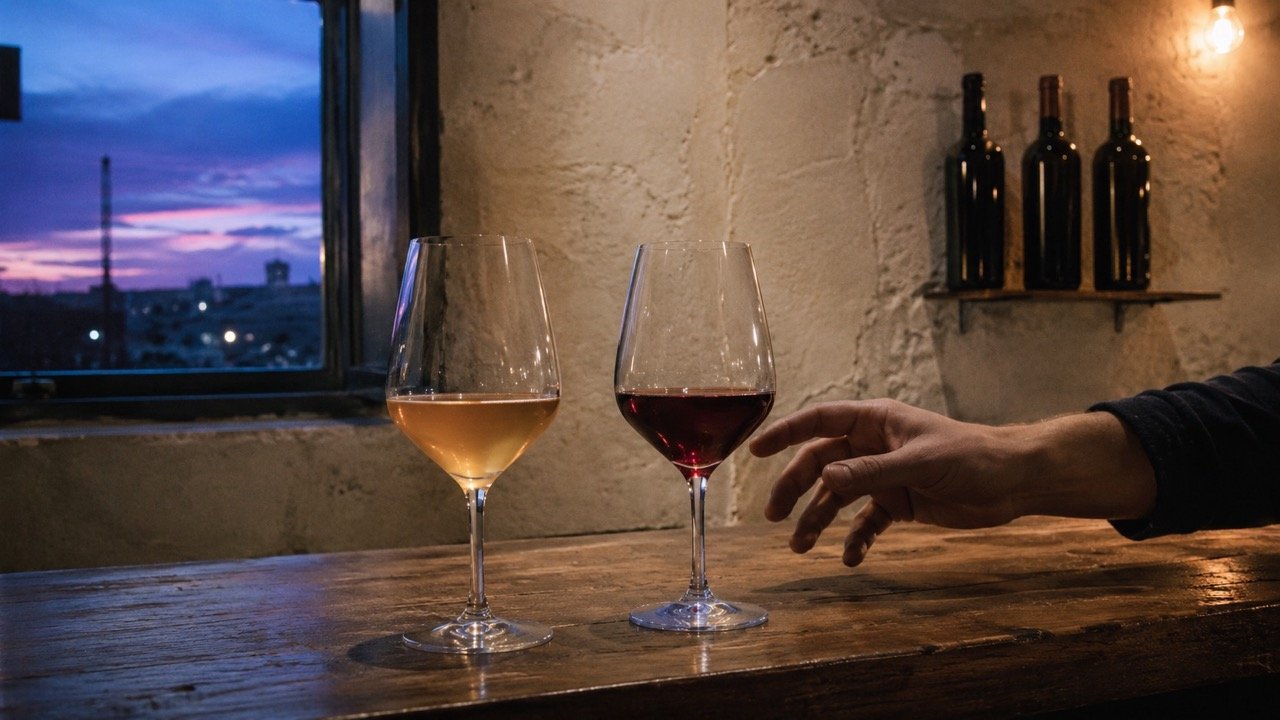
The inner north of Melbourne — Fitzroy, Collingwood, Brunswick, Northcote — has claimed a specific viticulture as its own, and the claim is not particularly recent any more. What began in the mid-2000s as a counterculture position — natural wine as an ethical and aesthetic refusal of the industrial mainstream — has become, in these postcodes, the default assumption. Walk into Marion on Gertrude Street or Neighbourhood Wine in North Fitzroy and the question is not whether you want minimal-intervention wine; the question is which country and which producer and whether you have encountered this particular maker from the Barossa or the Adelaide Hills before.
The argument behind natural wine — that wine made with indigenous yeasts, without synthetic additives, without fining or filtration — tastes more honestly of its place, and that this honesty is worth the textural risk and the vintage variation — has been made and argued and made again so many times in these neighbourhoods that it has moved past argument into settled conviction. The more interesting conversation in 2026 is about which Australian producers have moved from interesting to excellent, and what “natural” is beginning to mean as the category matures past its early iconoclasm.
What Melbourne’s inner north has created is not merely a bar culture — it is a distribution network and a taste formation. The producers who pour at Marion and Embla and Neighbourhood Wine and Bar Liberty are the same producers who stock the fledgling wine retailers on Smith Street and Brunswick Street, and who appear on the lists of the neighbourhood restaurants that take their cues from the same aesthetic. Jauma from the Adelaide Hills, Commune of Buttons from the same region, Shobbrook from the Barossa, Gentle Folk from Basket Range, Patrick Sullivan from Gippsland — these are the names that circulate in inner north wine conversations the way Grand Cru Burgundy names circulate at the other end of the cultural register. The difference is that you can afford to drink them regularly.
Embla
The connection between Embla and Melbourne’s natural wine culture is structural, not incidental. The list was built in collaboration with Eric Narioo, founder of the London natural wine importer Les Caves de Pyrène, and Patrick Sullivan, whose Gippsland wines appear on the list alongside a selection of European producers that would be at home in any serious Paris cave à manger. This is not accidental — it reflects a genuine intellectual engagement with what natural wine is and where it is going, rather than a marketing posture.
The Australian producers on Embla’s list are consistently at the serious end of the local field. Sullivan’s own wines from Strzelecki Ranges fruit carry the kind of rusticity-with-precision that characterises the best of the category — his Pinot Noirs have tannin structure and a wild-ferment savouriness that rewards cellaring in the way that most natural wines do not. The European section mixes Jura Savagnin, Loire Muscadet, and skin-contact Friulian whites in a way that creates a list logic: everything here has been chosen because it makes a specific argument about what wine can be when the winemaker gets out of the way.
122 Russell St, Melbourne CBD. embla.com.au
Marion Wine Bar
Andrew McConnell’s wine bar on Gertrude Street sits at the neighbourhood’s precise centre of gravity — across the street from Cutler & Co, whose wine cellar Marion shares, in the thick of the Fitzroy that the Wurundjeri Woi Wurrung people knew as Woiwurrung country before European settlement made this block of the inner north one of Melbourne’s most culturally specific addresses. The room is the former factory floor of a metal-plating operation, and the industrial bones — white-washed brick, bare floors, a dark patina on the woodwork — have been preserved rather than renovated. The space feels earned rather than designed.
The wine list clocks well into the hundreds and is arranged with an intelligence that reflects long editorial thought. Natural and minimal-intervention wines occupy a substantial section, but Marion’s list is genuinely pluralist — it does not exclude conventional wines that are excellent, and it does not include natural wines merely because they are natural. The filter is quality and interest, which is the only defensible position. The by-the-glass selection of more than twenty options at any time means that the list is explorable without commitment to a full bottle, and the service team is knowledgeable enough to guide the exploration.
The food — oysters, charcuterie from Meatsmith, daily-changing small plates — is calibrated to the wine rather than the reverse. This is as it should be in a wine bar. The kitchen’s role is to make more wine make sense, not to compete for attention.
51–53 Gertrude St, Fitzroy. marionwine.com.au
Neighbourhood Wine
On St Georges Road in North Fitzroy, Neighbourhood Wine operates with the quiet confidence of a venue that knows exactly what it is and has no interest in being anything else. The room is small, neighbourhood-scaled, with a natural wine list that leans heavily on Australian producers and a short menu of serious small plates. It is the kind of bar that a winemaker would choose on their night off — unpretentious, knowledgeable, with the specific warmth that comes from a room in which the owners are present and engaged.
The Jauma selections here deserve particular attention. James Erskine’s wines from the Adelaide Hills — made with zero sulphur, zero additives, zero filtration since his first harvest in 2010 — represent the serious wing of Australian natural wine: not interesting-because-weird, but genuinely delicious because the farming is right and the fruit is exceptional and the winemaking restraint is a genuine skill rather than an absence of technique. The Clairy Syrah and the Danby Grenache are the ones to seek out, though the range changes with each vintage and the list follows accordingly.
The Commune of Buttons Pinot Noirs from Jasper Button are another recurring reference point: light, precise, coolly perfumed, they demonstrate that Australian Pinot Noir at its best is making a completely different argument from anything that comes from the rest of the country, and that the natural wine context is an entirely appropriate frame for it.
59 St Georges Rd, North Fitzroy. neighbourhoodwine.com.au
Bar Liberty
In the inner north’s expanding natural wine geography, Bar Liberty on Rathdowne Street in Fitzroy North has occupied a consistent position: a room of real seriousness, with a list that combines European classics and Australian naturals at a level of curation that reflects genuine expertise. The kitchen programme is more ambitious than a typical wine bar — the cooking here is substantial, the plates are finished with care — and the room’s atmosphere balances the intellectual intensity of a serious wine list with the warmth of a neighbourhood place. It is the wine bar that has most successfully resolved the tension between connoisseurship and hospitality, which is the hardest thing a wine bar can do.
The list has a consistent presence of Gentle Folk from Basket Range — Gareth Belton’s wines, made from organically farmed small parcels in the Adelaide Hills, carry a precision and freshness that earns them a place alongside European producers of genuine standing. The Shobbrook wines from Tom Shobbrook in the Barossa are another Bar Liberty staple: Shobbrook’s Montepulciano and Nero d’Avola from SA fruit produce results that have no stylistic precedent in conventional Australian wine.
234 Johnston St, Fitzroy. barliberty.com.au
On the Producers That Define the Inner North’s List
The Australian names to know, across all four rooms:
Jauma (James Erskine, Adelaide Hills): Zero sulphur, zero additions, zero filtration. The Clairy and Danby are the entry points; the vintage variation is part of the experience.
Commune of Buttons (Jasper Button, Adelaide Hills): Light-bodied Pinot Noir and Chardonnay with a mineral precision that suggests serious vineyard farming rather than winemaking intervention.
Shobbrook Wines (Tom Shobbrook, Barossa Valley): Italian varieties — Montepulciano, Nero, Sangiovese — grown in South Australian conditions, with a Mediterranean-inflected freshness that is surprising and earned.
Gentle Folk (Gareth Belton, Basket Range): Among the most technically accomplished natural winemakers in the country. The Riesling is the thing people talk about; the Pinot Noir is the thing worth cellaring.
Patrick Sullivan (Gippsland, Victoria): The only major natural producer growing in Victoria, and the only one on the inner north’s lists making a case for Gippsland as a genuinely serious wine region. His Pinot Noirs have structure and longevity that exceed most of the category.
The conversation in these rooms assumes you know who these people are. If you don’t yet, this is the list to start with.