
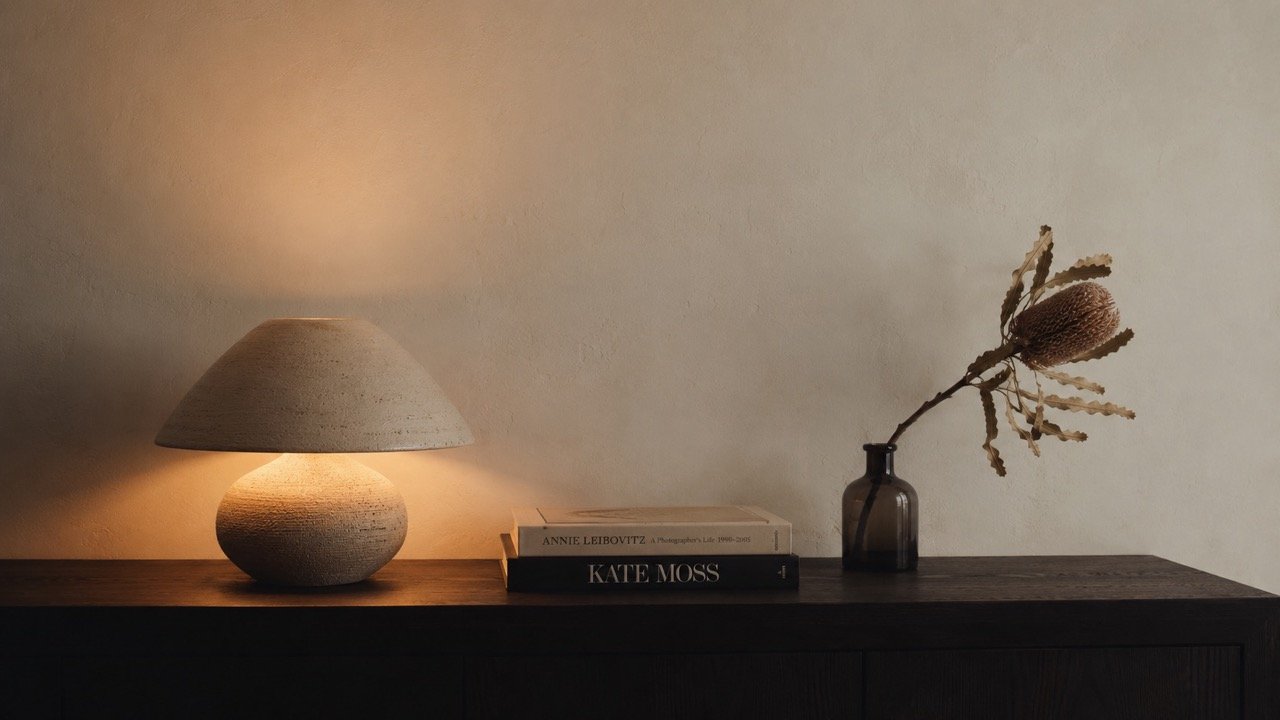
There is a category of object that occupies the boundary between craft and art with enough confidence that the distinction stops being useful. A ceramic bowl made by someone who has spent twenty years understanding how particular clays respond to particular kilns, who has developed a glaze language that no factory could replicate, and whose work enters private collections and design-led institutions alongside painting and sculpture — that object refuses to stay in the craft box. It is a singular thing, made by a specific intelligence, and it repays the attention of a cultivated eye in ways that mass production cannot.
Sydney’s studio maker community is, by any reasonable international measure, producing work of that calibre. The city’s craft ecosystem — anchored by institutions like Carriageworks, specialist galleries, and an annual ceramics market that draws more than 130 makers — has produced a generation of ceramicists, glass artists, and furniture makers whose work is only now beginning to receive the collecting attention it deserves. What follows is a field guide for those who want to engage with that work at the highest level of seriousness.
Sabbia Gallery, Redfern
The first stop for anyone approaching Sydney’s studio craft scene with collecting intentions is Sabbia Gallery at 609 Elizabeth Street, Redfern. Founded in 2005 by director Anna Grigson, the gallery has spent two decades building an international reputation as the premier space in Australia for contemporary ceramics, glass, and fibre art — a claim that is not contested by anyone paying attention. The relocation from Paddington to Redfern in 2019 clarified the operation: the new space is a proper gallery environment, with the scale and light required to show significant work at the scale it deserves.
The ceramics program at Sabbia represents the upper register of the national scene. The artists shown here are not emerging; they are established practitioners whose work appears in the collections of the National Gallery of Australia, the Powerhouse Museum, and significant private collections in Australia, Europe, and Japan. The glass program engages both with the Venetian tradition and with the specifically Australian innovations in studio glass — the work shown here regularly operates at a level that merits international comparison without anxiety.
The commercial dimension of the gallery is straightforwardly collector-oriented. Works are priced for acquisition rather than admiration, and the gallery staff’s knowledge of an artist’s full body of work — the development of a glaze language over a decade, the transition from functional to sculptural work — is precisely the kind of institutional knowledge that makes the difference between buying a beautiful object and building a meaningful collection.
609 Elizabeth Street, Redfern NSW 2016. sabbiagallery.com
The Sydney Ceramics Market at Carriageworks
Each October, Carriageworks in Eveleigh becomes the primary annual index of Sydney’s ceramics community — and the market’s scale and quality, which has grown year on year to encompass more than 130 ceramicists and makers, now constitutes a genuine cultural event rather than a craft fair in the reductive sense. The distinction matters to the collector: the Sydney Ceramics Market includes both the emerging maker selling tableware at accessible price points and the established practitioner showing limited sculptural editions that belong in the same conversation as gallery work.
The serious collector’s approach to the market is scouting. The names to watch — makers like Milly Dent, Studio Elke, and the quietly confident ceramicists working in the space between functional and sculptural — are identifiable here before their gallery representation catches up with their practice. A bowl bought from a maker at the Carriageworks market in October, and a work acquired from that same maker’s first gallery solo show three years later, represent the collecting intelligence that defines the people who build genuinely interesting collections.
The annual market also provides access to the broader making community: the glaze suppliers, the equipment makers, the school instructors whose teaching feeds into the professional scene. For the buyer interested in understanding what Sydney’s ceramics community is doing and where it is going, no single afternoon is more informative.
Carriageworks, 245 Wilson Street, Eveleigh. Annual October event. carriageworks.com.au
Furniture and the Australian Timber Tradition
Sydney’s studio furniture scene occupies a less crowded and consequently less visible position than ceramics, but the work being produced at the highest level is among the most considered in the country. The specific case for Australian hardwoods — blackwood from Tasmania, spotted gum from the NSW coast, the extraordinary figured grain of Queensland silky oak — is not merely an argument about provenance. These are timbers with working characteristics and visual properties that European furniture traditions have no equivalent for, and the makers who have spent decades understanding them produce objects that no amount of imported furniture can replace.
The challenge for the serious collector is access: unlike ceramics, where the gallery and market infrastructure is established, bespoke furniture makers typically work by commission and referral. The Australian Design Centre has historically served as a contact point for the broader made-object community, and Sydney Craft Week — the annual October event that runs alongside the Ceramics Market — consistently includes furniture and object design as part of its programming. The collector willing to pursue this category directly, through the makers themselves rather than through a retail intermediary, will find a level of service and co-creation that the commercial furniture market cannot offer.
The specific request — a dining table in figured blackwood, joinery without metal fasteners, a surface that will develop patina over the next thirty years — is the starting point of a conversation, not the end of one.
On Acquiring Studio Work
The first principle of acquiring studio craft is the same as the first principle of acquiring any art: buy what you find compelling, not what you think you should find compelling. The collector who builds a ceramics collection around personal conviction — a specific attraction to the way a particular maker approaches the foot of a bowl, or the particular quality of a celadon glaze achieved by someone who has been developing it for fifteen years — will end up with a more interesting collection than one assembled according to investment logic.
The second principle is relationship. The maker who knows that a particular collector has been following their work for three years, has attended two of their exhibitions, and understands the context of what they are doing, will give that collector access to work — early access to new series, commission opportunities, the ability to acquire pieces before public exhibition — that is not available to the opportunistic buyer.
The third principle is patience with price. Serious studio work is not cheap, and it should not be. The object that has taken twenty years of practice to make, and that reflects a material intelligence without parallel in the mass-produced world, is worth what it costs. The collector who understands this relationship is not paying for the object alone; they are sustaining the conditions under which the next object can be made.