
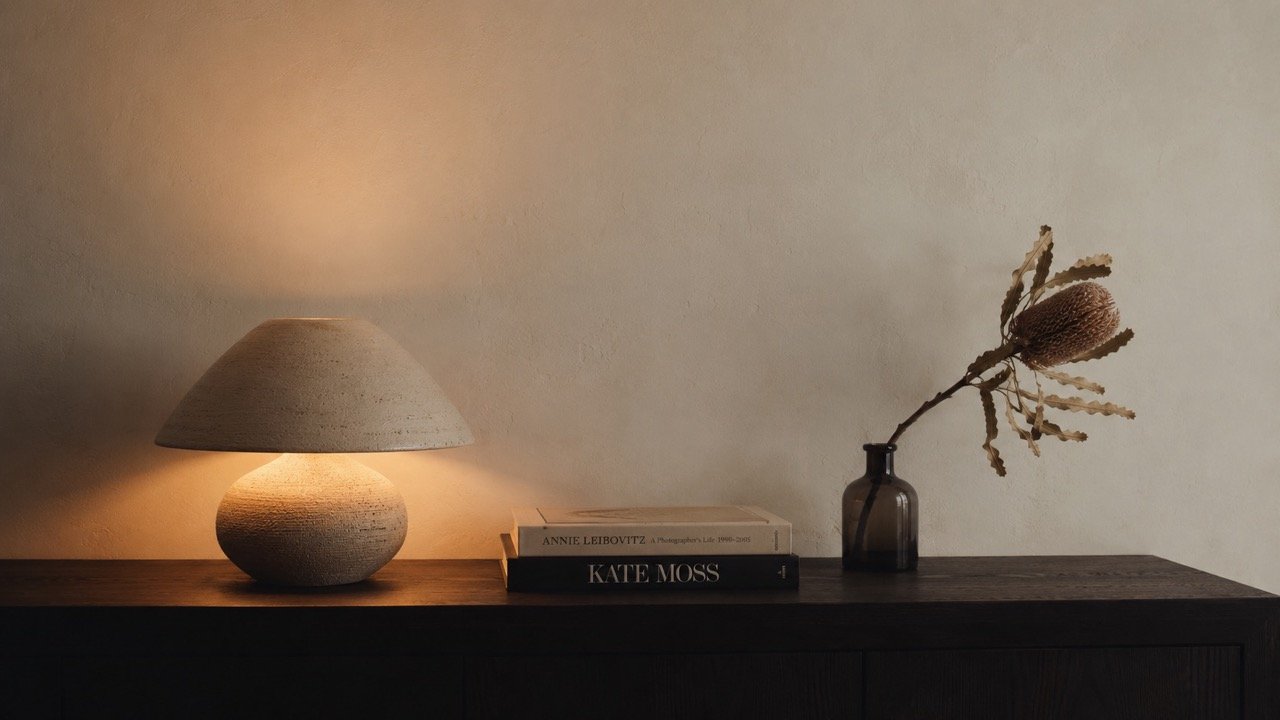
The best Melbourne ceramic is not comfortable. It does not fit into a Japandi-inflected interior without resistance, does not photograph cleanly against a white wall, does not read as a lifestyle accessory. It is irregular where regularity would be easier, textured where smooth would be more marketable, quieter than its price suggests and more insistent than its quietness implies. This is the quality that the city’s serious collectors recognise and that distinguishes a work from Melbourne’s inner-north ceramic community from equivalent production in more self-conscious craft markets. The irregularity here is not artisanal affect — not the performed imperfection of a Newtown ceramics studio following a Japanese wabi-sabi checklist — but the authentic result of a maker’s sustained negotiation with clay as a material that has its own intentions.
Melbourne’s ceramic community is structured differently to Sydney’s or Brisbane’s. It is inner-suburb and workshop-based, networked through proximity rather than through institutional structures — the Collingwood and Fitzroy studios feed into the Abbotsford Convent market, the Abbotsford Convent market feeds into Craft Victoria, Craft Victoria feeds into NGV acquisitions and private collections. This circularity means that a collector who follows the chain can move from a Saturday morning market purchase to a museum-collection artist’s studio visit in a series of conversations rather than a series of applications. The ecosystem is intimate. It rewards sustained engagement.
The specific quality of Melbourne light — cool, grey-gold, diffuse, European in its flatness — has shaped the city’s ceramic aesthetic in ways that are not often articulated but are everywhere visible. This is not warm Mediterranean light that flatters terracotta and thick glazes. It is the light that makes clay bodies honest, that reveals hairline texture differences in surface treatment, that shows the exact colour of an oxide glaze without flattering it. Melbourne ceramicists who have worked in this light for years make objects calibrated to it: surfaces that change subtly across the day as the angle shifts, forms that look different in winter grey-gold than in summer silver. Buying a Melbourne ceramic is partly buying the light it was made in.
Anchor Ceramics: Collingwood
Anchor Ceramics operates from Collingwood — the inner-north suburb whose converted warehouses and factory buildings have housed Melbourne’s craft-maker community for a generation. The studio produces wheel-thrown and handbuilt work that sits somewhere between the functional and the sculptural, a position that the best ceramics have always occupied and that lesser makers collapse into one direction or the other. An Anchor bowl can hold fruit, but that is not primarily what it is for; a vessel from the studio can be displayed, but it is not primarily a display object. The work proposes a kind of serious everyday use — the beautiful object engaged with rather than preserved.
The glazes are not flashy. This is the correct choice. Melbourne’s ceramic colour sense tends toward the muted, the mineral, the green that reads as grey in one light and as sage in another, the white that carries so much blue-grey that it barely reads as white. These are colours that age with interiors rather than dating them, that respond to seasonal light shifts rather than fixing a room in a single mood. Anchor’s production is small enough that pieces vary meaningfully across firing batches; a collector who visits multiple times will find that the same form in the same purported glaze colour is not quite the same object.
Collingwood, Melbourne. anchorceramic.com
The Abbotsford Convent Market: Where Ceramics Circulate
The Abbotsford Convent — the former convent complex at 1 Saint Heliers Street, Abbotsford, now one of the most significant arts precincts in an Australian city — hosts a Maker’s Market on the third Sunday of each month that functions, for ceramics, as the city’s most reliable access point for serious production work. Over fifty makers appear at the annual Melbourne Ceramics Market specifically, and a significant proportion of the Maker’s Market regulars are ceramicists. The market is not a tourist destination; the buyers are collecting, not browsing. You will see the same faces across multiple months — the architect who buys a new mug each visit, the restaurant owner sourcing for a private dining room, the sculptor who is also a collector of other people’s clay.
What the Convent market produces that a gallery cannot is access: the maker is present, the price reflects actual production cost rather than gallery commission, and the conversation that accompanies a purchase is the most direct available. You can ask a ceramicist standing behind their market table why a specific glaze broke the way it did, what clay body they’re working with, whether the firing schedule changed between last month’s pieces and this month’s. The knowledge transfer is part of the transaction. This is what makes the Abbotsford Convent market, at its best, something closer to a collector’s private view than a public market.
1 Saint Heliers Street, Abbotsford. abbotsfordconvent.com.au
Craft Victoria: The Gallery-Shop Interface
Craft Victoria, now located at Watson Place off Flinders Lane, occupies the critical institutional position in Melbourne’s craft ecosystem: it is simultaneously a gallery, a shop, and a curatorial intelligence that has been representing maker-practitioners for more than four decades. Its permanent collection shop is not a gift shop. It stocks jewellery, ceramics, glass, textiles, and designed objects selected by curators with a genuine point of view — work that passes through a quality and significance filter that the market and the studio visit cannot apply.
For the collector who wants to begin buying Melbourne ceramics but lacks the network to navigate the studio and market system, Craft Victoria is the correct starting point. The staff know the makers; they can tell you who is producing the most interesting work at any given moment, whose practice has changed recently in ways that make the new work more compelling than the previous, which maker is worth visiting in the studio versus buying from the shop. They will not sell you something they are not convinced of. This editorial confidence — a willingness to have an opinion about what is worth collecting and to act on it — is what makes Craft Victoria useful rather than merely representative.
Watson Place, off Flinders Lane, Melbourne CBD. craft.org.au
The Collector’s Protocol
The inner-north ceramic community rewards frequency over intensity. A single visit to the Abbotsford Convent market, a single trip to Anchor Ceramics’ studio, a single conversation with Craft Victoria’s shop staff — each is productive, but the cumulative effect of returning monthly, of following a maker across several firing cycles, of watching a practice develop in real time, is where serious collecting begins.
Buy something that makes you slightly uncertain. Melbourne’s best ceramics often do — the piece that is more interesting than comfortable, more demanding than beautiful, more specific than decorative. Given time, it will reorganise the room around itself. That is what excellent ceramics do.