
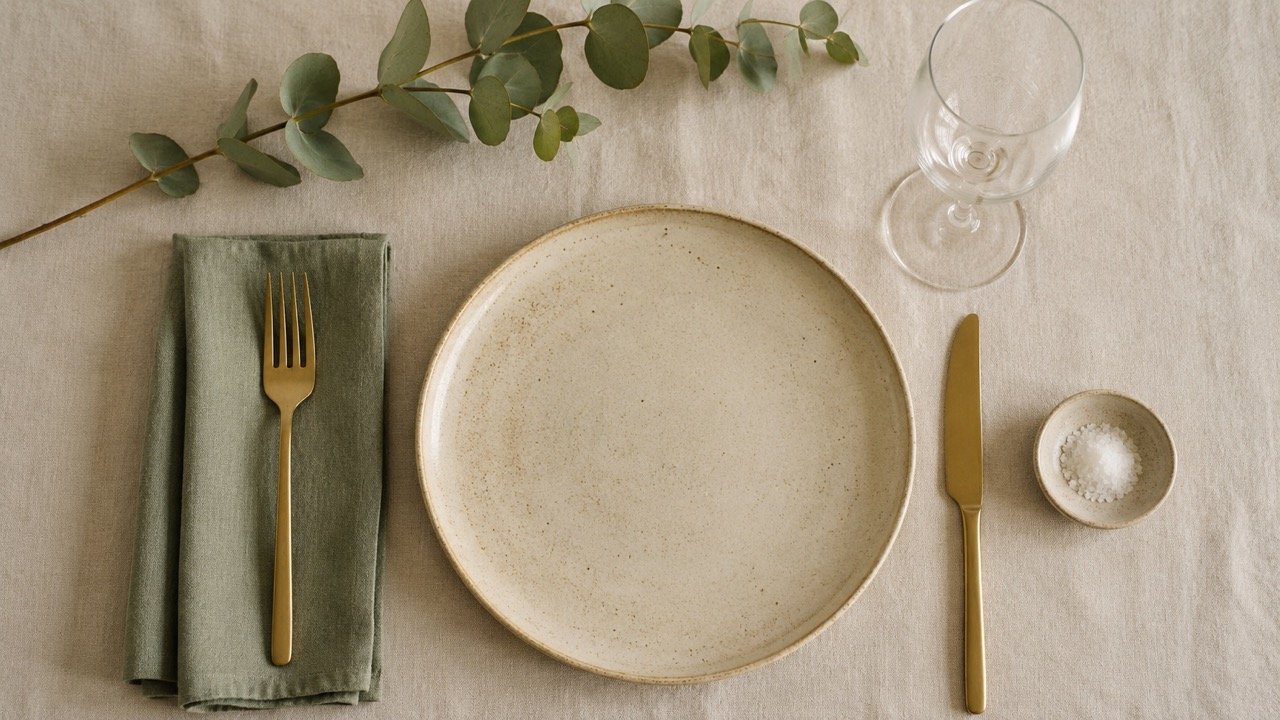
The table is an argument about values. Every choice on it — the weight of the glass, the texture of the cloth, the temperature of the plates, the position of the salt — communicates something about the host’s relationship to pleasure, to material quality, and to the people sitting around it. The argument can be made unconsciously, through inheritance or habit, or it can be made deliberately, through the accumulation of knowledge about craft and materials and the makers who have dedicated their working lives to the objects we touch most often.
This guide is for those interested in making the argument deliberately — in sourcing tablescape elements with the care a serious collector brings to a painting or a wardrobe, understanding what distinguishes exceptional from adequate, and finding the Sydney makers and retailers who produce or carry work at the level these objects deserve.
The Plate: Australian Ceramics
The most interesting ceramic work available in Sydney comes not from importers but from a generation of Australian studio potters who have developed a language specific to this climate, these materials, and this particular relationship with Japanese and Scandinavian making traditions.
Anchor Ceramics (Marrickville): One of Sydney’s most collected studio pottery operations, producing stoneware in the muted, textured palette — salt-glazed, ash-glazed, natural iron — that the best Australian ceramics have made their own. The dinner plate range is available directly from the studio and through selected retailers. Pieces are not uniform; each carries the trace of the maker’s hand, which is the point.
Robert Gordon Australia (national): For those building a full setting with consistent depth, Robert Gordon’s Australian-designed stoneware — produced to their specifications and available through their Sydney stockists — provides a middle path between the uniqueness of studio pottery and the reliability of mass production. The surfaces carry enough variation to feel handmade; the pricing allows for a full twelve-place setting.
Helen Young Ceramics (Surry Hills): Young’s work sits at the fine-art end of the ceramic spectrum — sculptural as well as functional, limited in production, highly collected. Dinner pieces from her studio appear on the tables of several of Sydney’s most celebrated restaurants. Available through Galerie Aparis and by direct commission.
The Glass: Where Weight and Clarity Meet
The glass is the most-touched object on the table. Its weight in the hand, the rim thickness against the lip, the way it transmits the colour of the wine — these details are noticed even by guests who cannot articulate why their wine tastes better in one vessel than another.
Riedel Sommeliers Series (available at Simon Johnson, David Jones Food Hall): The Riedel argument for variety-specific glassware is well-established and well-founded. The Sommeliers series — hand-blown rather than machine-made, with a rim thickness and stem geometry that the machine-made series cannot approximate — is the correct level for serious dining. A full set of Burgundy, Bordeaux, and white wine shapes covers the vast majority of what a serious home table requires.
Lobmeyr (available through select importers): For those who consider glassware a collecting category rather than a tableware category, Lobmeyr — the Viennese house that has been producing exceptional glass since 1823 — produces blown glasses of extraordinary thinness and clarity. Available through selective import; Harrolds can source on request.
Spiegelau Definition (widely available): For the practical table where glasses will be washed in a machine and replaced when broken, Spiegelau’s Definition series provides a quality of clarity and rim thinness at a price point that makes replacement emotionally manageable. The white wine glass is the most useful single piece in the range.
The Cloth: Linen Above All
Linen earns its primacy at the table through properties that no other textile replicates: it absorbs moisture without feeling damp, it wrinkles in ways that look deliberate rather than neglected, it ages better than it begins, and it communicates a quality of restraint and care that polyester blends actively negate.
Society Limonta (available through Déa Interiors, Sydney): The Italian house’s linen tablecloths and napkins are among the finest available globally. The colour range is disciplined — no novelty, only the muted naturals and quiet tones that function as background for everything on the table. Available through Déa Interiors in Surry Hills.
Lapuan Kankurit (available through selected lifestyle retailers): Finnish linen woven in the house’s own looms with a quality of hand and drape that the mass-market linen brands cannot approach. The tablecloth range is particularly strong.
Cultiver (Australian, online): For Australian-sourced quality at a more accessible price, Cultiver produces stonewashed French linen tablecloths and napkins of consistent quality. Available online and from their own retail space.
The Cutlery: The Object Most Taken for Granted
Cutlery receives less attention than almost any other element of the table and produces more impact on the dining experience than almost any other element except the glass. The weight of a fork in the hand, the balance of a knife, the way a spoon cups — these translate directly into the pleasure of eating.
Christofle (available at Harrolds and the Christofle boutique, Sydney CBD): The French house’s Perles collection — plain, architectural, with a circular detail at the handle’s end that has been in continuous production since 1872 — is the most elegant flatware programme in production. Silver-plated on a base metal; the plate will require re-plating every decade or so with heavy use.
Georg Jensen Bernadotte (available at David Jones): The Danish house’s 1939 Bernadotte pattern — designed by Sigvard Bernadotte, son of the Swedish king who was also a significant industrial designer — is the most considered modern flatware design in the Scandinavian tradition. Stainless steel; the quality of the steel is such that the pieces do not exhibit the fingerprint retention that lesser stainless produces.
The Salt: The Detail That Declares Everything
The salt dish — small, uncovered, positioned where the hand can reach without reaching across — is the table detail that most reveals whether the host has thought at a granular level about the objects on the table.
Bonnie and Neil (Melbourne): Ceramic salt dishes in abstract brushwork patterns that function as individual objects regardless of their function. Available through the brand’s website and selected Sydney stockists.
Fleur de sel de Guérande: Not a vessel, but the salt itself. The fleur de sel produced on the Brittany coast of France — hand-harvested, unrefined, with a mineral complexity and crystal texture that table salt cannot approximate — is the correct salt for a serious table. Available at Simon Johnson, Providore, and specialist food retailers throughout Sydney.