
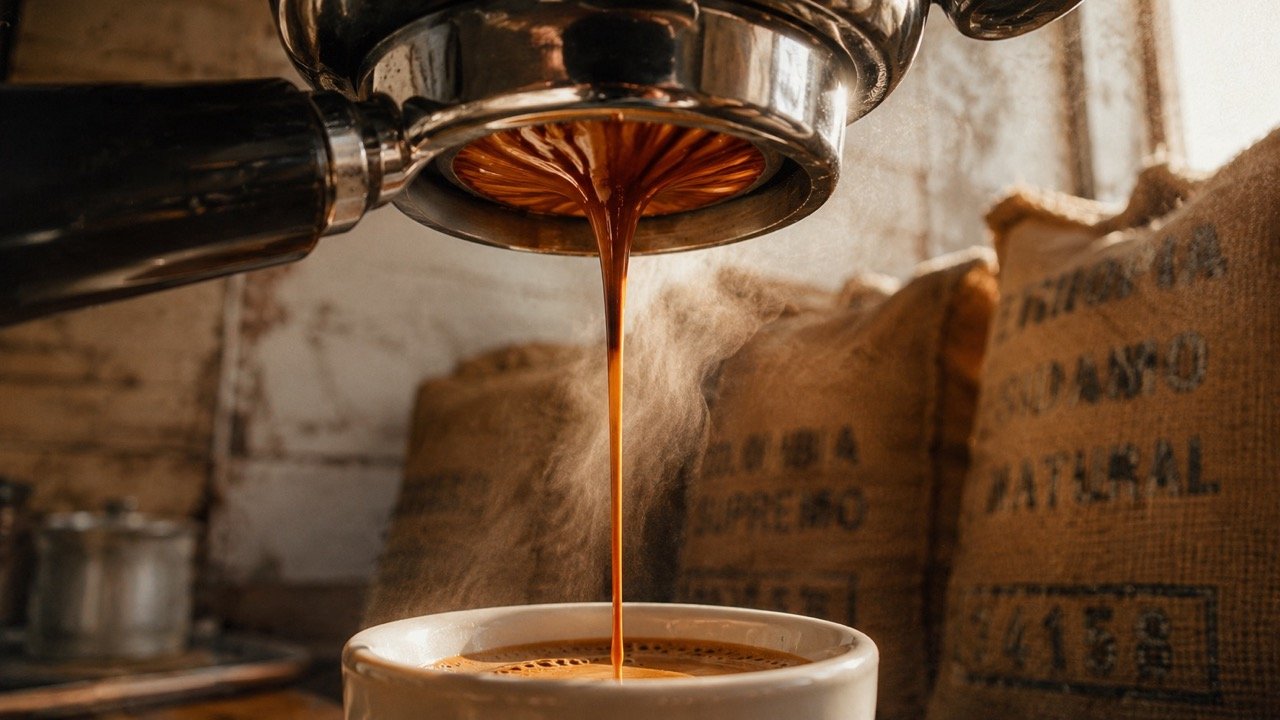
Melbourne has been described as Australia’s coffee capital so many times that the description has become meaningless — a marketing convenience, a tourism shorthand, a thing people say to visitors before handing them a flat white and considering the subject closed. The flat white is real and it is good and it is the lingua franca of this city’s cafe culture. But the flat white is not where the serious conversation is happening. The serious conversation is happening in the cupping room, in the water chemistry calculations, in the sourcing relationship between a roaster in Fairfield and a cooperative in the Yirgacheffe Zone that took four visits to establish. Melbourne’s coffee culture is not primarily a lifestyle — it is a form of connoisseurship, and it demands the same rigour from its practitioners as wine or whisky from theirs.
The infrastructure of this obsession is built from specific people making specific decisions at each link in the chain. At the sourcing end: which farms, which lots, which processing method — washed, natural, honey — and what the roaster wants that process to amplify or suppress. At the roasting end: what development ratio, what drop temperature, and how the resulting coffee will behave at different brew ratios and grind settings. At the service end: what water mineral content produces the clearest expression of the coffee’s inherent characteristics, what temperature extracts the aromatics without pushing bitterness, what vessel — ceramic, glass, a specific pour-over filter — changes the experience for the drinker. The flat white, as a format, contains almost none of this complexity. It is designed to be consistent and approachable. The filter menu is where the argument lives.
Understanding Melbourne’s coffee culture properly means understanding that the city’s leading roasters are not primarily in competition with each other on quality — they are making different aesthetic arguments about what coffee should do. Seven Seeds and Market Lane share a commitment to sourcing transparency but diverge on what flavour profiles they are seeking. Axil is asking different questions from Proud Mary. The city is large enough to contain these disagreements without resolving them, which is precisely what makes it interesting.
Seven Seeds
Since 2007, Seven Seeds has operated from a converted warehouse on Berkeley Street in Carlton that functions as both roastery and the city’s most influential specialty coffee classroom. The space is deliberately unglamorous — bare concrete, long communal tables, a roaster visible from the bar — because the point is the coffee, not the room. The single-origin filter menu changes with the sourcing programme, and it is here that Seven Seeds’ most considered argument is made: that coffee, like wine, expresses its origin most completely when the roasting and brewing intervene as little as possible.
The Carlton roastery has a calibrated sourcing programme that reaches into East Africa, Central America, and select lots from Indonesia and Yemen. The relationship with specific farms and cooperatives is not incidental — it determines the quality ceiling of everything that follows. What Seven Seeds understood early, and what the specialty coffee world has come to accept, is that the green coffee is the most important variable. You cannot roast or brew your way to a quality that was not present in the bean at harvest. The filter menu here — which typically lists four to six single-origin options with tasting notes, farm information, and suggested brew ratios — is a weekly record of that sourcing intelligence.
Order the filter and sit with it for the time it deserves. The V60 or Kalita Wave will arrive looking deceptively simple. It is not simple. It is the end product of a supply chain that started months ago on a hillside in Ethiopia or Colombia, and every decision made since then has been designed to make the coffee in your cup taste as completely of that place as possible.
114 Berkeley St, Carlton. sevenseeds.com.au
Market Lane Coffee
Market Lane has eleven locations across Melbourne, and the scale could easily have been the thing that killed its integrity. It hasn’t, because the sourcing philosophy precedes the expansion and still drives it: Market Lane does not blend. Every coffee in the roastery’s catalogue is a single-origin lot, bought on the specific merits of that lot, not as a component of something else. This is a more radical commitment than it sounds. Blending allows a roaster to maintain a consistent house profile regardless of what the harvest yields. Single-origin means that if the Ethiopian lot from the Guji Zone isn’t as vibrant this year as last, you cannot correct it by adding something else — you find a better lot, or you remove the coffee from the menu. Market Lane’s transparency about this process — published on their website and on the bag — is unusually honest in a category where opacity is common.
The Queen Victoria Market outpost is the one to know: it serves as an informal anchor for the city’s most interesting morning ritual, the early produce market that draws chefs and serious cooks before eight. The coffee here, consumed standing up in the market’s covered section, is one of Melbourne’s most genuine pleasures — entirely unpretentious, entirely excellent. The Prahran Market location is similarly positioned at the intersection of coffee culture and serious food culture, which is where Market Lane has always understood itself to belong.
The filter programme is the argument. The espresso is excellent and consistent. But the filter, ordered intentionally and consumed with attention, is where you taste what Market Lane’s sourcing department is actually finding.
Multiple locations. marketlane.com.au
Axil Coffee Roasters
David Makin and Zoe Delany’s Axil Coffee operates from a roasting facility in Hawthorn and a handful of cafes that have established the brand as the serious practitioner of what might be called farm-direct connoisseurship. Axil’s Direct Trade programme requires sustained relationships with specific farm families — not just box-ticking ethical certifications, but the kind of connection that means Makin knows the elevation of each block, the processing infrastructure on the farm, and how a shift in the previous year’s rainfall affected the harvest.
The single-farm filter menus that Axil publishes are closer to a wine producer’s technical sheet than a typical cafe menu. The information is specific: lot number, varietal (coffee has varietals — Gesha, Sidra, Bourbon, Caturra — that matter enormously), processing method, altitude, and the harvest date. This is not decoration. It tells you what you are tasting and why it tastes that way. The Hawthorn roastery and cafe is the right place to have this conversation — the team there have the technical knowledge to walk you through the sensory implications of each variable.
Order the filter. Ask what the team is most excited about this week. They will tell you, at length, and the conversation will be worth having.
Multiple locations; roastery and flagship cafe: 322 Burwood Rd, Hawthorn. axilcoffee.com.au
Proud Mary
Proud Mary in Fitzroy is the most theatrically confident of Melbourne’s serious roasters — a place that operates with the conviction of a restaurant kitchen rather than a cafe. The menu reads with genuine ambition, the sourcing is specific, and the filter programme regularly features micro-lots that would not make commercial sense at less committed operations. What Proud Mary has always understood is that specialty coffee needs a stage as much as it needs a supply chain: you cannot ask people to care about lot numbers and processing methods if the physical experience of drinking the coffee is indifferent.
The Fitzroy cafe on Oxford Street has a room that earns the coffee. The filter menu changes regularly, and the team is genuinely missionary about the technical aspects of what they are serving. This is not performative — it is the natural posture of people who have thought seriously about their craft and want to share the thinking.
172 Oxford St, Collingwood. proudmarycoffee.com.au
The Protocol of Serious Coffee
A few distinctions that separate the casual drinker from the interested one:
Filter over espresso for assessment. Espresso is a compression of flavour — it amplifies both the desirable and undesirable characteristics of the coffee. Filter (V60, Kalita, AeroPress, cold brew) is more transparent; you taste the coffee’s actual character more clearly. When you want to understand what a roaster is doing, start with the filter.
Ask about the water. Melbourne’s tap water is soft and low in minerals, which typically makes excellent brewing water — but the best roasters calibrate their mineral additions to specific coffees. The question signals that you know the question exists.
The flat white as calibration tool, not ceiling. Order it to understand the cafe’s espresso baseline. Then explore upwards.
Do not order a cappuccino at Seven Seeds. You can. No one will object. But you will have taken one of Melbourne’s most sophisticated coffee programmes and asked it to make you a foam-topped drink. The filter menu is the right way to experience what this city is actually saying about coffee.