
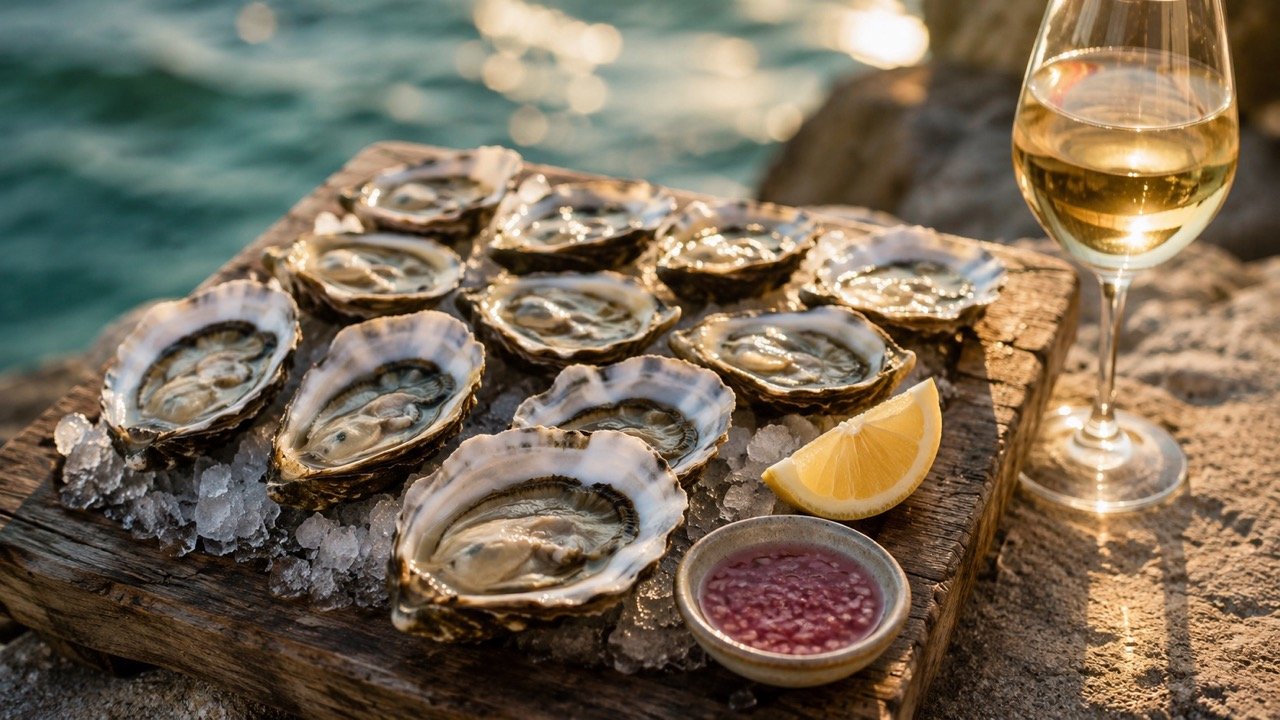
The Sydney Rock Oyster (Saccostrea glomerata) is one of the more quietly extraordinary things that can be eaten in this city, and the people who know it well know that the name is a form of shorthand that obscures far more than it reveals. A Sydney Rock from Wallis Lake tastes nothing like one from Merimbula, and neither tastes like one from Port Stephens — and a careful taster, given the same three oysters in the same condition on the same day, can identify not merely the region but something approaching the specific estuary. The concept has a word borrowed from wine: merroir, the aquatic equivalent of terroir, and in the case of the Sydney Rock it is as real and as instructive as any appellation system in use.
The oyster itself is a native species, thriving naturally in just forty-one locations along Australia’s east coast, concentrated around the thirty-third parallel of latitude — which is, incidentally, where the name of the East 33 producer group comes from. It grows slowly compared to the Pacific oyster (three to four years, versus one to two for the imported variety), cannot be farmed outside its native range, and does not improve with refrigeration the way a Pacific can. It is, in a word, a creature of its place.
Wallis Lake: Mineral and Marine
Wallis Lake, 303 kilometres north of Sydney on Worimi Country, is a vast estuary fed by four rivers and has been home to oyster farming since the early 1900s. The geography of the lake creates a flavour gradient that experienced buyers understand the way a Burgundy négociant understands premier versus grand cru: front-lake oysters, grown close to the ocean inlet where salinity is high and the seabed is pebbly, are briny and mineral with a low umami finish — clean, sharp, direct. Back-lake oysters, grown where freshwater rivers introduce nutrients and the seabed is silty, develop higher umami, greater creaminess, and a longer finish.
The peak season at Wallis Lake runs across the summer months, when warmer water temperatures bring the oysters to condition. A Wallis Lake Rock at its peak in February — crisp, mineral-rich, creamy through the middle, with a lingering sweetness — is a textbook exemplar of what the species can produce. The producers farming the northern leases of the lake have, in recent years, begun making appellation-level claims for their position and provenance that are, on the evidence of the oysters themselves, entirely justified.
Merimbula: The Briny South
Six hundred kilometres down the coast from Sydney, Merimbula Lake on Yuin Country represents the opposite end of the Sydney Rock flavour spectrum. Here, the estuary is narrow, the tidal currents are strong, and the water is kept at near-oceanic salinity by constant exchange with the Pacific. The result is an oyster with elevated minerality — zinc, copper, and iodine from the trace elements in the tidal flow — and a signature boldness: intense brine, sweet, with a mineral zing on the finish that does not appear in oysters from more sheltered estuaries.
Sapphire Coast Oysters and the broader Appellation Oysters operation from this region have, in recent years, earned consistent recognition at the Sydney Royal Fine Food Show and the Narooma Oyster Festival. These are producer-names worth knowing, and worth asking for by name at the city’s better raw bars. The Merimbula oyster is not for the cautious; it announces itself.
Port Stephens: The Balanced Centre
Port Stephens, a vast estuary framed by volcanic headlands and fed by the Karuah, Myall, and Twelve Mile Creek rivers, produces the Sydney Rock that most closely approaches the classical ideal of the species: well-balanced creaminess from summer to autumn, full flavour with medium sweetness, mild brininess, and a lasting mineralisation that sits in the back of the palate without the aggression of the Merimbula oyster. For the table where not everyone has deep opinions about their oysters, Port Stephens is the reliable choice. For the table where everyone does, it is the basis for a comparison.
East 33 Limited, the largest vertically integrated Sydney Rock producer in the country, draws significantly from the Wallis Lake system and manages the distribution network that supplies many of Sydney’s better restaurants. The provenance conversation around East 33 product — the ability to trace a specific batch to a specific lease, a specific farming family — is part of the appellation culture developing around this species.
Where to Eat Them in Sydney
Sydney Cove Oyster Bar, on the eastern promenade of the Circular Quay seafront, is the correct answer to the question of where to eat Sydney Rock oysters with the harbour as backdrop. The setting is unambiguous: the Opera House sails to the left, the Harbour Bridge to the right, and the oysters in front of you. The selection rotates by region and condition, and the staff have enough knowledge of their product to direct the interested customer.
The Morrison Bar and Oyster Room in the CBD operates from a brass oyster cabinet and sells volumes — reportedly over 6,000 shucked-to-order oysters per week — that reflect the specific Sydney corporate appetite for raw shellfish. The selection here consistently includes Appellation Oysters from the Sapphire Coast, shucked to order, and the wine list supports them accordingly.
For those who prefer to eat their oysters somewhere less transactional, the raw bars associated with several of the city’s serious seafood restaurants — Quay, Aria, the fish-facing restaurants of the eastern bays — all run selections that rotate with season and supply.
On the Drink, the Accompaniment, and the Argument
The correct drink with a Sydney Rock Oyster is an argument that has been conducted without resolution in Sydney for at least thirty years, and the various positions deserve their advocates.
The Champagne case is reflexive and not entirely earned: Champagne’s acidity cuts the brine, the bubbles refresh the palate, and the combination is undeniably pleasurable. But it is a French answer to an Australian question, and the French answer is not always the most interesting one available.
The Chablis case is more considered: the steely, high-acid, unoaked Chardonnay of northern Burgundy — particularly Premier Cru Montée de Tonnerre or a good village Chablis from a grower like Raveneau — mirrors the iodine and mineral character of a Merimbula oyster in a way that feels like a conversation rather than a condiment.
The Hunter Semillon case, however, is the argument that the serious Sydney oyster-eater should make at least once. A young Hunter Semillon — bright, acidic, with lemon citrus and almost no sweetness — cuts through the creaminess of a Wallis Lake oyster and elevates the finish in a way that no imported wine can replicate. The combination is native in the most meaningful sense: two specifically Australian expressions, each revealing something in the other that neither contains alone.
On the matter of accompaniments: mignonette — shallot, red wine vinegar, cracked pepper — is the one acceptable condiment, and it should be used sparingly. A squeeze of lemon is a legitimate gesture. Anything that introduces sweetness, sauce, or heat is a distraction from the point of the exercise, which is the oyster itself.