
Port Phillip Bay is 1,950 square kilometres of enclosed water fed by the Yarra and Maribyrnong rivers and connected to Bass Strait through the narrow gap at the Heads between Sorrento and Queenscliff. It is not an ocean beach. The water is calm most days, grey-flat in the manner specific to enclosed bays — a pewter quality that painters have been trying to capture since Heidelberg School artists set up their camps on these shores in the 1880s — and the fetch is short enough that the waves, on most days, are a polite six inches. This is the point.
Bay water, in Australian coastal culture, is a consolation prize. The real beaches face the ocean; the bay is where you go if you can’t manage the drive. This reading is so common that it is worth examining carefully, because it misses almost everything interesting about a body of water that has shaped Melbourne’s character since the first European settlement at Sorrento in 1803. The bay is not an absence of ocean. It is a presence of something else entirely: a specific Victorian domestic pleasure in calm water, in sailing on flat chop, in the particular civic warmth of a beach culture that has been practised in the same locations for 160 years without requiring surf or spectacle. The western shore and the eastern shore each carry this pleasure in different registers, and both reward the person willing to spend a day attending to them.
Williamstown: The Western Shore
Williamstown sits on a peninsula at the mouth of the Yarra, connected to Melbourne by ferry and by road through the Westgate and available on foot from Newport station. It was Victoria’s first seaport — the Customs House on Osborne Street has been processing arrivals since 1852 — and the precinct retains a density of nineteenth-century maritime infrastructure that no other suburb of Melbourne matches: bluestone bond stores along Nelson Place, the dry dock on the waterfront, the former Timeball Tower on the foreshore that once signalled Greenwich Mean Time to ships in the bay. Walk from the station to the foreshore, turn left along Nelson Place, and read the buildings rather than the heritage plaques for a picture of a port town that was serious about its international role before Melbourne had paved roads.
The waterfront at Williamstown looks back across the bay toward the city — the CBD visible in the east, a container ship typically anchored in the shipping channel, the Westgate Bridge arcing to the north — and this view, available from any of the cafes and restaurants along Nelson Place, has a quality of accidental civic beauty that most Melburnians overlook because it arrives without effort. On Sundays, the foreshore between the ferry pier and Commonwealth Reserve fills with people who are there for the same reasons Williamstown people have always been there: to be near the water, to watch the boats, to eat in a place that still smells of the bay. The Point Gellibrand Coastal Heritage Park at the tip of the peninsula adds a lighthouse (1853), fort earthworks from the 1880s, and a direct view of Port Phillip Heads that communicates the strategic reason for the original settlement.
Williamstown foreshore: Nelson Place, Williamstown. Ferry from Southgate via Docklands in summer.
Brighton: The Eastern Shore
The 82 timber bathing boxes at Brighton Beach are the most photographed objects on Port Phillip Bay and among the most misunderstood. They are not decorative — they are functional structures, privately owned and trading at prices that reflect beachfront real estate rather than beach-hut logic, providing the same storage and changing-room function they have provided since the 1860s. Each is painted in a colour scheme unique to its owner, and the row of them from the water — the bay flat and grey behind, the boxes standing in sentry order along the sand — is genuinely beautiful in the way of things that have been where they are long enough to stop looking deliberate.
The beach at Brighton in summer operates as a suburb in miniature: early morning swimmers in the flat water, a sailing school from Royal Brighton Yacht Club launching onto the bay, the cafes on Bay Street filling by 9am, the background presence of the Sandringham rail line audible from the foreshore. In winter, the boxes are locked, the beach is largely empty, and the quality shifts to something more austere and more honest — the pewter water, the south wind, the CBD visible in the north across twenty kilometres of flat bay. Both versions are specifically Victorian in a way that takes time to appreciate.
Brighton Beach Bathing Boxes, Esplanade, Brighton. Walk south along the foreshore from Brighton Beach station.
Beaumaris and What Remains of Mid-Century Ambition
Beaumaris sits south of Sandringham along the eastern shore, and its residential streets — particularly between Reserve Road and Banksia Street, above the cliff line — contain the highest concentration of intact mid-twentieth century modernist domestic architecture in Melbourne. These houses were built between the 1950s and the late 1970s by architects who were engaging seriously with American and European modernism: open plans, flat roofs, full-height glazing toward the bay, courtyards and gardens treated as extensions of the living space. Many are behind tea-tree hedges on elevated blocks and are not easily visible from the street, which has protected them from the renovation pressures that have altered comparable houses elsewhere.
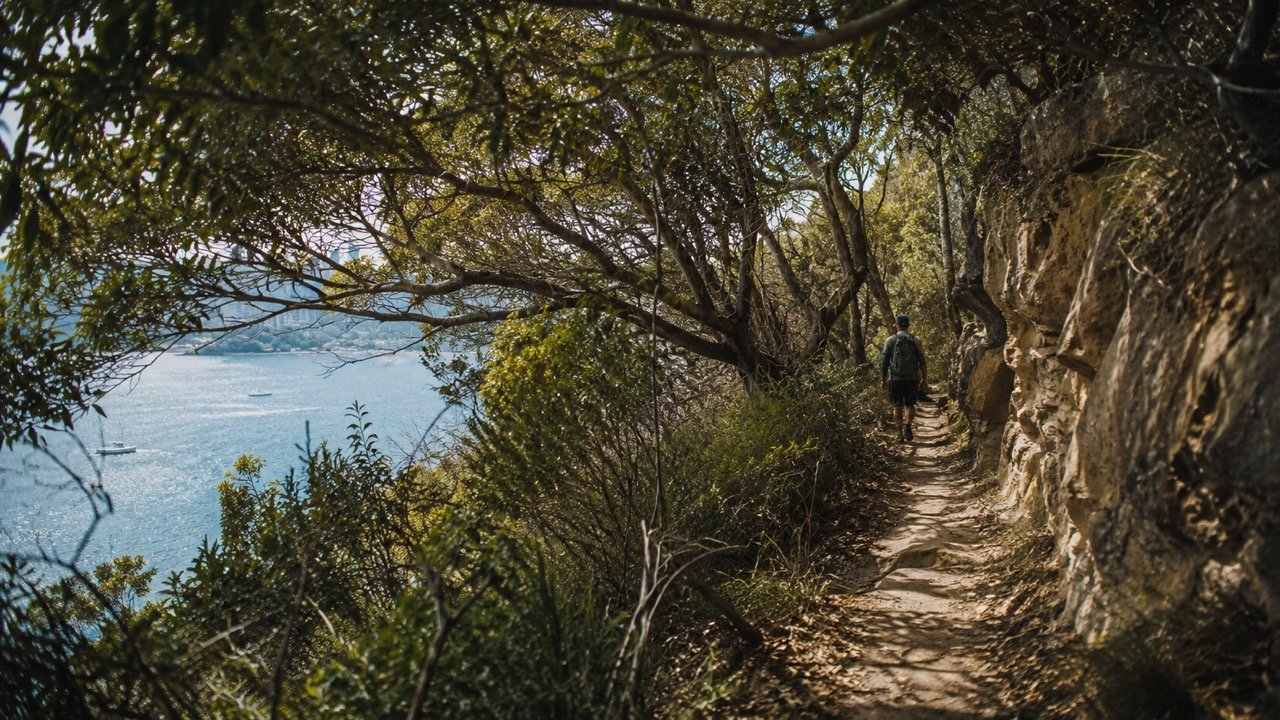
The Beaumaris foreshore walk, running along the cliff top above the bay through native vegetation, connects to Mentone in the south and Sandringham in the north and is one of the better bay walks available: the cliff line here is higher than at Brighton, the tea-tree scrub more intact, and the views across the bay on a clear day reach to the Macedon Ranges in the north and the You Yangs in the west. The architecture is best seen by parking along Tramway Parade or New Street and walking the residential blocks on a weekday morning when the streets are quiet enough to look without guilt.
A Note on the Bay as Practice
The bay rewards the person who treats it as a recurring rather than occasional practice. The morning swim at Brighton — cold, brief, into flat pewter water — is a ritual that many eastern-shore residents maintain year-round, which is to say in water temperatures around 13 degrees in July. The sailing on Port Phillip, conducted by both the Royal Melbourne Yacht Squadron at St Kilda and the Royal Brighton Yacht Club, involves afternoon sea breezes building to 25 knots by 2pm and producing technically demanding sailing on flat chop without the Pacific swell that makes ocean racing a different proposition. The bay is never dramatic. It is specific, domestic, and, if you pay attention to it, endlessly interesting.