
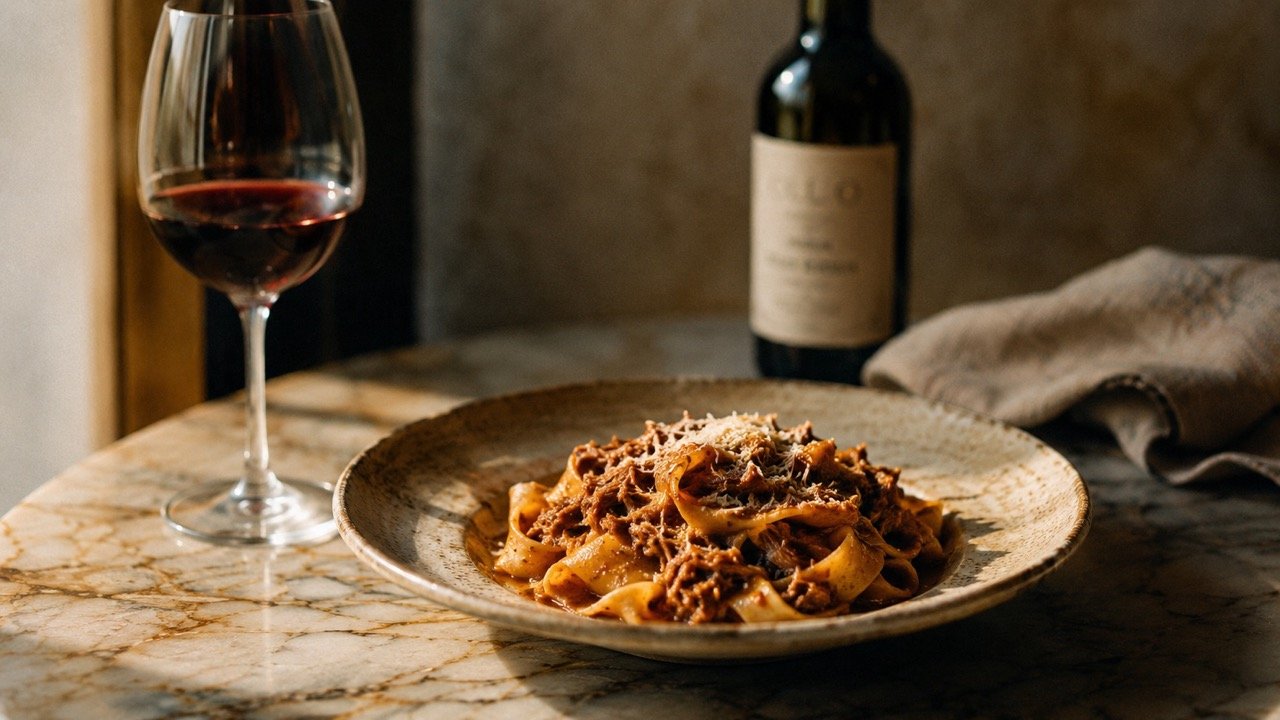
Lygon Street is not the whole story. It is not even the most interesting chapter. The broad, tourist-facing strip of Carlton that gave the world its image of Melbourne’s Italian community — the red-and-white checkered tablecloths, the gelato shops, the espresso bars that have been photographed so many times they have become monuments to themselves — is real, and parts of it are genuinely excellent. But the Italian cooking of Melbourne that matters most is not on Lygon Street. It is on the streets adjacent to it, in the side lanes and the converted terrace houses, in the rooms that have not been updated since the 1970s and where the cooking has not been updated either, because the cooking has not needed to be.
Melbourne has one of the largest Italian communities outside Italy — a fact that is cited often and understood rarely in its full implication. The migration wave of the 1950s and 1960s brought not an abstract “Italian culture” but specific regional cultures: Calabrian, Sicilian, Venetian, Campanian, Friulian. These communities settled in Carlton, Fitzroy, and Brunswick and established not Italian restaurants in the generic sense but the cooking of their specific home regions — the fermented charcuterie of Calabria, the dried pasta traditions of Sicily, the risotto and polenta cultures of the Veneto and Friuli. These traditions did not arrive as restaurant food. They arrived as domestic cooking, and the best of Melbourne’s old Italian rooms are the ones where the domestic cooking eventually moved into the dining room without changing its character.
The contemporary Italian dining scene in Melbourne operates on two distinct registers that rarely overlap. There is the modern Italian — Tipo 00 and its contemporaries, serious pasta bars and enotecas that engage with Italian culinary tradition as a living set of ideas to be interpreted. And there is the old Italian — the rooms that have been feeding the same families since the 1950s and that measure their cooking not against restaurant trends but against the standard of an Italian grandmother’s kitchen. Both matter. The second one is disappearing.
Flower Drum
Gilbert Lau opened the Flower Drum in 1975, but the detail relevant to the Italian question is what the restaurant reveals about the geography of Melbourne’s culinary culture at the time: that a Chinese restaurant in Market Lane — not Chinatown’s tourist-facing Bourke Street strip, but the quieter lane beside it — could become, within a generation, one of the world’s most recognised restaurants by offering a standard of cooking and service calibrated to a Melbourne clientele that had been educated by decades of proximity to Italian and Chinese immigrant communities who took food seriously.
The Flower Drum’s relevance to Melbourne’s Italian story is indirect but real: it represents the civic consequence of a city that learned to eat well through the proximity of immigrant communities who cooked without apology or mediation. The Italian community taught Melbourne that a three-hour lunch was a legitimate use of a day. The Chinese community taught it that specific regional cooking — not a generalised “Asian cuisine” — was worth travelling for and paying attention to. The Flower Drum, which still operates in Market Lane under the ownership of executive chef Anthony Lui and his partners, is one of the places where you feel the historical depth of Melbourne’s culinary culture.
17 Market Lane, Melbourne CBD. flower-drum.com
DOC Group and the Carlton Side Streets
The DOC Delicatessen and restaurants that operate across Carlton and the inner north represent a thoughtful engagement with the tradition of Italian food in Melbourne that goes beyond restaurant nostalgia. The DOC approach — a deli and pizzeria culture that draws on the southern Italian traditions that dominate Melbourne’s Italian community — is calibrated to the specific regional cooking of Calabria and Sicily rather than the generic Italian register that most restaurants default to.
The Carlton delicatessen operation is the right entry point: the cured meats and the preserved vegetables and the imported pantry staples that form the foundation of the cooking. The Calabrian chilli paste, the ‘nduja, the house-made salumi — these are not products of a culinary fashion; they are the working ingredients of a specific regional tradition that arrived with the Calabrian families who settled in Carlton in the 1950s and 60s. The cooking they inspired — long-braised ragù with dried pasta, stuffed vegetables, preserved things — is the architecture of a domestic Italian kitchen transported to the southern hemisphere.
The side streets of Carlton — Drummond Street, Rathdowne, the lanes off Lygon — still hold a few rooms of the old register. They are not tourist destinations. They are not on the restaurant review circuit. Some of them do not have websites. They are identified by the local Italian community’s sustained loyalty, which is a more reliable recommendation than any review.
Scopri
In North Melbourne, Scopri operates in the quiet, instructive tradition of the Italian enoteca — a room where the wine is the organizing principle and the food supports it with a classicism that is entirely at odds with the contemporary casual dining trend. The wine cellar at Scopri is primarily Italian and primarily serious: Barolo, Brunello, Fiano, Greco di Tufo — the full depth of the Italian canon, served in a room that understands the relationship between the bottle and the plate.
The kitchen produces southern and central Italian cooking of the kind that is available in very few Australian restaurants: handmade pasta with Calabrian ragù, whole-roasted fish with Sicilian caponata, desserts that draw on the ricotta and citrus traditions of the Campanian kitchen. The cooking is not fashionable. It is correct, which is a harder thing to achieve and a more lasting one. The service team has the confidence of people who have been doing this for long enough to know that they do not need to compete with the restaurants that are trying to be interesting.
This is Melbourne’s Italian question at its most direct: the cooking that arrived with the immigrant community and has refused to be updated because the original is the answer.
On Errol Street, North Melbourne. Verify current details before visiting.
On Finding the Real Thing
Melbourne’s Italian culinary tradition is not in crisis — it is in the process of generational transfer, and in that process, some of what was real and irreplaceable is being lost. A few ways to find what remains:
The deli as map. The delicatessens of Carlton and Brunswick — particularly the older ones that sell imported product alongside the domestic — are indicators of where the community still lives and eats. The good restaurant is often close to the good deli.
The Thursday night test. A room full of Italian families on a Thursday — not a Friday or Saturday, when any restaurant fills up — is the most reliable indicator of a kitchen’s genuine standing with the community it came from.
Ask about the pasta. Restaurants that make their own pasta and have been doing so for decades will have a specific pasta shape associated with a specific regional tradition: orecchiette for Pugliese-influenced kitchens, rigatoni for Roman, trofie for Ligurian. The shape tells you where the kitchen’s heart is.
The wine list as a diagnostic. A short Italian list, mostly southern Italian, with wines you have not heard of, suggests a kitchen operating in a specific regional tradition rather than a generic Italian register. A long list of obvious Supertuscan names suggests the opposite.
Avoid the Lygon Street tourist operations. Not because they are bad — some are genuinely good — but because the real story is adjacent to them, not on them.