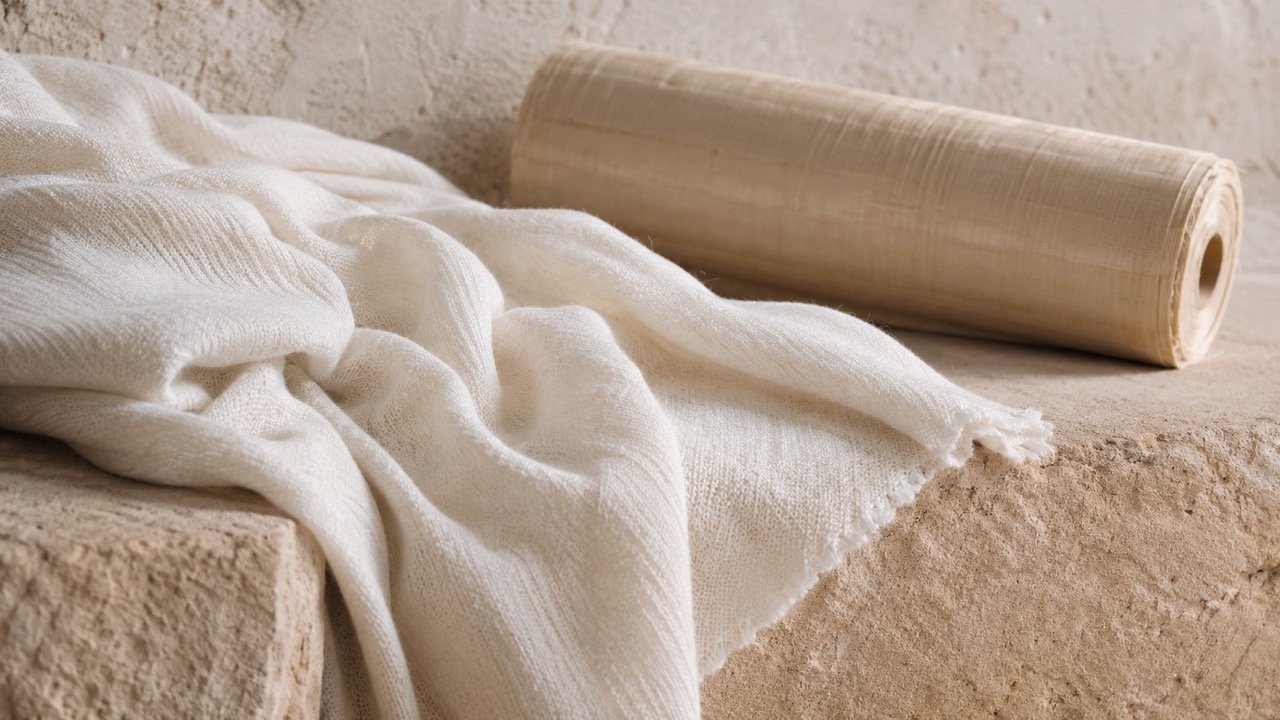
The fabric itself is the argument. Not the garment, not the label, not the photography: the fabric, which you can touch before you buy and which will tell you, if you know how to read it, more about the intelligence behind a maker’s practice than any amount of branding. A Belgian linen that has been certified through the European Flax system, processed without the bleaching and softening treatments that make cheaper linens feel temporarily pleasant and permanently less, has a specific hand — slightly cool, slightly rough in a productive way, with a lustre that develops rather than diminishes through washing — that is unmistakable to anyone who has held it alongside a conventional cotton pretending to be linen. Melbourne’s serious textile makers know this distinction and build their practice on the right side of it.
The city’s textile culture is rooted in craft rather than trend, in fibre quality rather than label recognition, in the understanding that natural fibres processed correctly outlast the wardrobes built around them. This is a European-inflected position — Melbourne’s postwar Italian and Greek immigrant communities brought a relationship with cloth as investment and inheritance that the city has never entirely lost — and it has been maintained, in the contemporary craft context, by a community of makers who source from certified mills, print or dye or construct by hand, and sell to buyers who understand what they are paying for.
Australia’s own fibre resources give Melbourne’s textile culture a specific material advantage. Australian merino wool — from the fine-micron flocks of the high country and the western plains — is among the most technically accomplished in the world; Japanese buyers have known this for decades, and Australian makers are increasingly processing it domestically rather than shipping raw fibre overseas. Linen grown from flax processed in Belgium or France is the international standard; Australian linen cultivation is smaller but growing. Japanese chambray, washed cotton, and specifically finished denim have been available through Melbourne’s fabric stores since the 1980s and continue to be the reference materials for independent garment-makers who want a shirt or trouser fabric that reads as architectural rather than casual.
Tessuti Fabrics: 141 Flinders Lane
Tessuti Fabrics, established in 1992 and operating from the upper ground floor of 141 Flinders Lane — in the block that was once the centre of Melbourne’s rag trade, a fact the building still wears in its bones — is the city’s most serious working fabric store. The European atelier aesthetic of the space (cavernous, concrete floors, cast-iron radiators, natural light through high windows) reflects the quality of what it stocks: designer ends from Missoni, Armani, Chanel; Japanese pattern books and notions; wools, silks, cottons, linens, and laces from Italy, Japan, and France that would not be available to a home sewist or independent maker in any other Australian city at the density and quality that Tessuti achieves.
The store functions as education as much as retail. The staff know what they are selling in the way that a good wine merchant’s staff know a cellar: the provenance of a fabric, its processing history, what it will do in a specific construction, how it will behave in Melbourne’s seasonal range. A maker who walks in with a design problem and the willingness to explain it will walk out with a fabric recommendation that is specific to the construction, the season, and the intended use — not to the current bolt that needs shifting. Tessuti also runs sewing classes that function as the most direct available professional development for independent makers working with quality cloth.
Upper ground floor, 141 Flinders Lane, Melbourne CBD. tessuti-shop.com
Ink & Spindle: Hand-Printed Natural Textiles
Ink & Spindle, based within the Abbotsford Convent since its founding in 2008, produces hand-screen-printed textiles on organic cotton/hemp and certified Belgian linen basecloths — the detail of the certification and the basecloth source is not incidental but constitutive of the practice. The organic cotton/hemp blends are GOTS certified; the linens are Oeko-Tex Standard 100 certified. This matters because it means the fabric that receives the botanical print has not been treated with the bleaches, optical brighteners, and finishing chemicals that standard fabric processing involves and that compromise both the hand of the fabric and its longevity.
The imagery — Australian native botanical flora, rendered in water-based, solvent-free inks — is calibrated to the specific quality of the basecloth: the designs work with the natural grain and colour variation of linen and organic cotton rather than treating them as neutral surfaces to be covered. The result is textiles that read as designed rather than printed — in which the relationship between the ink and the cloth is considered, not applied. Available by the metre, as homewares, and as custom curtains, blinds, and upholstery, Ink & Spindle’s production represents one of Melbourne’s most coherent fusions of print culture and textile craft.
1 Saint Heliers Street, Abbotsford (Abbotsford Convent). inkandspindle.com.au
The Independent Garment-Makers: Inner-North Studios
Melbourne’s inner-north hosts a community of independent garment-makers — small operations working in natural fibre, producing in limited runs or to commission, selling through studio shops, markets, and Instagram with a deliberateness that reflects the specific economics of making well in an expensive city. These are not fashion labels in the conventional sense: they are not producing seasonal collections, not selling wholesale into retail, not building for scale. They are making specific things — a shirt in Japanese linen, a coat in Australian merino, a wrap in silk-wool blend — in quantities that allow hand-sewing at the critical construction points, and selling them to buyers who understand the difference.
The Abbotsford Convent Maker’s Market and Rose Street Artists’ Market in Fitzroy are the most reliable access points for this community in person. What to look for: garments that have been pressed (the maker cares about the finished form); natural fibre labels that specify provenance rather than content percentage alone; hems and buttons that are hand-finished; pattern placement that reflects deliberate choice. The maker who can tell you why they chose this specific chambray for this specific garment, and what they considered before choosing it, is producing at a different level than the maker who cannot.
Rose Street Artists’ Market: 60 Rose Street, Fitzroy. Abbotsford Convent Maker’s Market: 1 Saint Heliers Street, Abbotsford.
The Protocol of Buying Natural Fibre in Melbourne
Learn to read a fabric label in its full detail, not just the content percentage. ‘Linen 100%’ can denote Belgian flax processed to International Linen Association standards, or it can denote Chinese flax processed with chemical softeners that will result in a garment that pills and fades in twelve months. The difference is in the hand of the fabric and in the sourcing information that a maker who takes their materials seriously will provide without being asked.
The two questions that filter serious makers from the rest: Where is the fabric from? and What was your reason for choosing it over alternatives? Both questions deserve specific, unhesitating answers from anyone selling a garment at a price that reflects craft rather than commodity.