
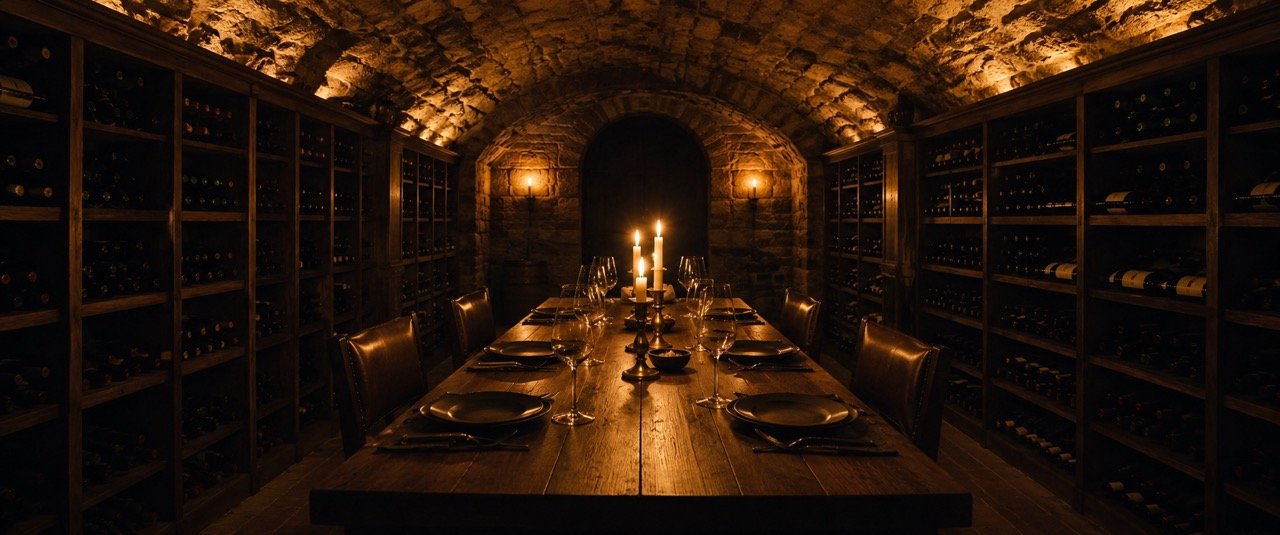
The cellar is not a collection. It is an argument about time. Every bottle placed on its side is a small act of faith — in the winemaker, in the vintage, in your own patience — and the bottles that eventually emerge from a serious cellar are different creatures from the ones that went in. The tragedy of most wine collections in Sydney is not that they lack ambition; it is that the city conspires against them. Humidity arrives from the harbour. Heat radiates from sandstone in summer. A power outage during a long weekend is enough to ruin a decade of anticipation. Serious collectors know this, and they plan accordingly.
What follows is not advice for the curious beginner. It is a conversation for those already drinking well who want to drink more deliberately — who have discovered, perhaps, that a ten-year-old Hunter Semillon transforms something fundamental in the understanding of Australian wine, and who want more of that transformation, reliably delivered.
The Climate Problem and Its Solutions
Sydney’s climate is the first variable any serious collector must solve. The city sits in a subtropical band — humid summers pushing into the mid-thirties, with the diurnal temperature swings required for good bottle maturation largely absent from inner-suburb terraces and apartments. A bottle stored in an undercroft that fluctuates between 12°C and 22°C over the seasons is not being cellared; it is being slowly cooked, its tannins softening prematurely, its fruit browning before the magic of aged complexity has any chance to emerge.
The practical answer for collectors without basement space — which accounts for most of Sydney — is purpose-built storage, either at home or off-site. A purpose-built in-home cellar, properly insulated with a through-wall cooling unit, can be constructed in a wardrobe or under a staircase for considerably less than a year’s drinking budget, and will pay for itself in bottles that actually arrive at their intended destination. The target is 13°C to 14°C with humidity at 70 per cent; those two numbers, held consistently, are the foundation of everything else.
For those storing serious volumes — or who simply prefer the security of a professionally managed facility — Rushcutters Wine Storage in the eastern suburbs represents the calibre of off-site solution a considered collector should know. Climate-controlled to cellar specification, secured to private-vault standard, and equipped with digital inventory management, the facility has become a genuine part of the eastern Sydney collecting infrastructure. Collectors running cellars across multiple locations — a working collection at home, the serious bottles at Rushcutters — is not an uncommon arrangement among the city’s most dedicated buyers.
Rushcutters Wine Storage, Rushcutters Bay. rushcutterswinestorage.com.au
The Merchants Worth Knowing
A relationship with the right merchant is worth more than any app or auction subscription. The sommelier who drinks for pleasure goes to people with taste, not to people with algorithms. Sydney has several merchants of genuine calibre; three are worth a serious collector’s attention.
The Oak Barrel on Elizabeth Street in the CBD is, at its core, a specialist in things that reward patience: aged spirits, natural wines from producers with actual track records, and a staff culture that actively discourages buying before you understand what you are buying. Founded in 1956, its longevity is not incidental — this is a shop that has survived because its buying reflects genuine conviction rather than category-filling. For the collector building in the natural wine direction — orange wines, skin-contact whites, low-intervention reds — the range is without peer in the city.
P&V Wine + Liquor Merchants at 64 Enmore Road, Newtown, occupies a different register: the inner-west intelligentsia of the bottle-shop world. The list runs heavily to small-production, grower-producer wines from unexpected places — the kind of selections that eventually appear on the lists of the city’s most serious restaurants. P&V’s events and tastings are a genuine education, and the staff’s knowledge of emerging Australian producers, particularly in the natural and organic categories, is among the best in the country.
For the blue-chip side of the cellar — the aged Hunter, the serious Barossa Shiraz, the Coonawarra Cabernet that benefits from a decade in the dark — the collector should also maintain a relationship with whichever of the city’s fine wine specialists has earned their trust over multiple transactions. The market fluctuates; a merchant who tells you not to buy something is worth more than one who tells you to buy everything.
The Oak Barrel: 152 Elizabeth Street, Sydney CBD. oakbarrel.com.au P&V Wine + Liquor Merchants: 64 Enmore Road, Newtown. pnvmerchants.com
The Hunter Semillon Argument
No conversation about cellaring in the Australian context is complete without Semillon, and the Hunter Valley argument for this variety is one of the more compelling cases in any wine culture in the world. The wine that goes into the bottle — picked early, low in alcohol, aggressively acidic, with a lemon water thinness that seems to offer nothing — is not, in its youth, a wine worth serious money. That is precisely the point.
At ten years, something happens that no other white wine in the world replicates at this price point. The colour deepens to gold. The acidity, rather than fading, integrates into a scaffolding of honeyed toast, beeswax, and lanolin, with a waxy texture that was entirely absent in the wine’s first years. A ten-year-old Tyrrell’s Vat 1 or Brokenwood Graveyard Semillon drinks at a level that has no logical right to exist given its purchase price; the collectors who know this buy futures and wait, and they are never disappointed.
The same argument applies, in a different register, to Hunter Shiraz. A serious Shiraz from a good Hunter vintage — Brokenwood, Thomas Wines, Tyrrell’s — needs eight to twelve years to resolve the mid-palate grip of tannin and fruit into something more composed, more interesting, more itself. The secondary notes that emerge — leather, earth, dried herbs, the particular iron-blooded minerality that only the Hunter delivers — are not present in the young wine. They are made by time.
The Auction House and What to Do While Waiting
Langton’s has operated as Australia’s primary fine wine auction house since 1988, and any serious Sydney collector should have an account. The secondary market intelligence available through Langton’s — classification data, price history, cellaring performance records across Australian producers — is the closest the domestic market comes to a Price+Robert equivalent. Their regular auctions, including the Sydney Barossa live auction, provide both buying opportunities and the most accurate gauge of what a well-cellared bottle is actually worth.
The question that serious collectors consistently underestimate is what to drink while waiting. A cellar built heavily in futures — buying wine to age — creates an access problem for the impatient. The answer is what experienced collectors call the working cellar: a separate tranche of wine intended for near-term consumption, bought at modest price points, that provides daily drinking of actual quality while the serious bottles mature undisturbed. The most experienced Sydney collectors drink local — a good Yarra Valley Pinot, a thoughtfully made Clare Valley Riesling, a Margaret River Chardonnay from a reliable producer — while their Hunter Semillons acquire the character that only patience can provide.
Langton’s Fine Wines: langtons.com.au
On the Protocol of the Serious Cellar
Track everything. The best cellar in the world is wasted if you cannot find what you are looking for. A simple spreadsheet — variety, producer, vintage, date acquired, drinking window, location — is more useful than any app that lacks your own contextual notes.
Buy in sixes. A single bottle is a single conversation. Six bottles is a relationship: you open one at five years, one at eight, one at twelve, and discover something different each time. The remaining bottles benefit from what you have learned.
Never cellar wine you do not already enjoy drinking young. Age does not improve wine it only develops it. A wine you find thinly made or structurally compromised at two years will not improve into something elegant. Age amplifies character, both good and bad.
The most experienced collectors keep a tasting journal. Not for others, but for themselves. The accumulated notes on how their bottles are tracking — what a particular producer’s wines look like at five years, at ten, at fifteen — constitute a form of private knowledge that no magazine, app, or merchant can provide. It is the real point of the cellar: not the bottles themselves, but what you come to understand about them.