
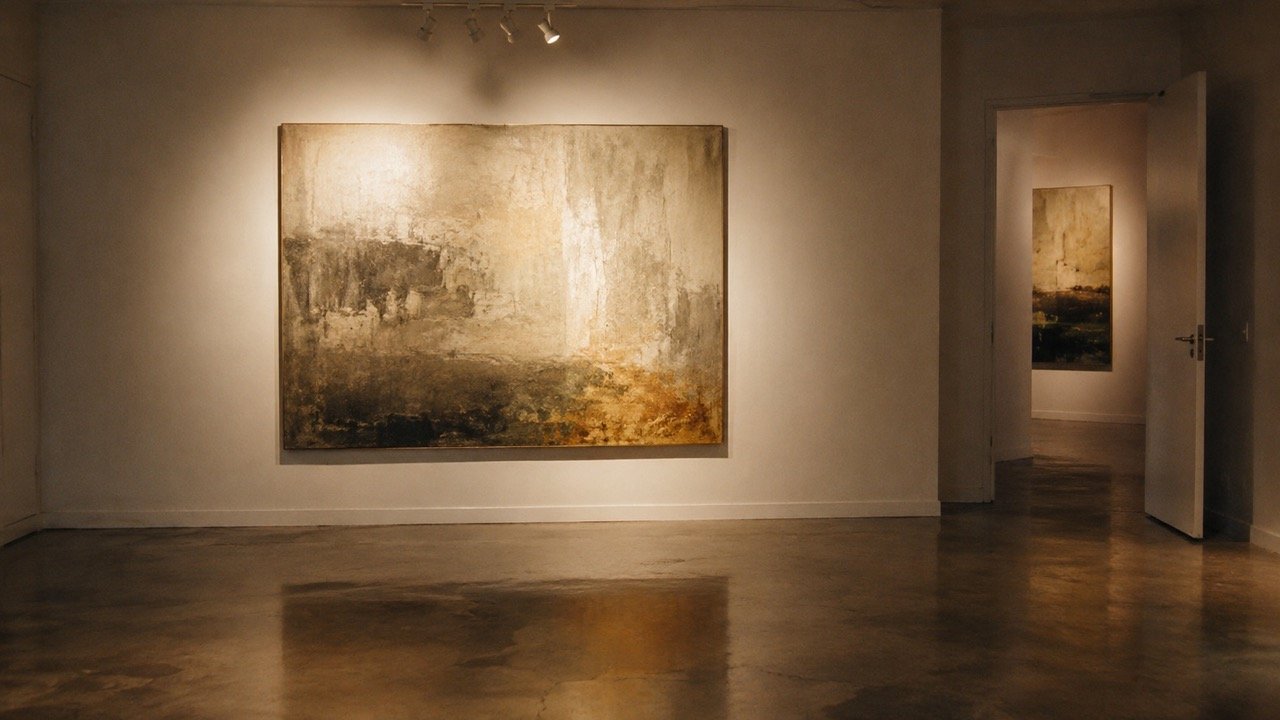
The commercial gallery is one of the few remaining institutions where knowledge is freely shared without expectation. The staff in the rooms listed below are, in almost all cases, genuinely expert — in the artists they represent, in the market conditions that surround those artists, in the history of practice that gives the current work its meaning. They are also, uniformly, willing to share that expertise with visitors who ask good questions. The asking of good questions is, as always, the collector’s most valuable skill.
Sydney’s commercial gallery scene sits in an interesting position. The city has the wealth, the cultural appetite, and — increasingly — the critical infrastructure to sustain a serious primary market. It has produced and continues to produce artists of significant international standing. What it lacks is the depth of institutional buying that New York, London, and Hong Kong provide, which means that the primary market for serious contemporary Australian work is still weighted toward private collectors — a position that, for buyers operating with knowledge and patience, creates opportunities.
Roslyn Oxley9 Gallery, Paddington
Roslyn Oxley9 has occupied its position at the top of the Sydney commercial gallery scene for long enough that it functions as a barometer for the city’s broader cultural confidence. Since opening in 1982, the gallery has represented some of the most significant Australian artists of the past four decades — Tracey Moffatt, Hany Armanious, Mike Parr, Destiny Deacon — while consistently introducing international artists whose practice enters productive dialogue with the Australian context.
The Paddington premises — a converted warehouse on Soudan Lane — provide exhibition space of unusual versatility. Works that would be compressed in most Sydney galleries breathe correctly here: large-scale canvases have wall, video installations have room, sculptures have floor. The programme typically runs six to eight solo and group exhibitions per year, each managed with the curatorial seriousness of a mid-sized public institution.
For the emerging collector, Roslyn Oxley9 represents a reliable calibration point: the artists here have been selected and sustained over time, which provides the kind of track record that pure emerging gallery programmes cannot offer.
8 Soudan Lane, Paddington. Tuesday to Saturday 10am–6pm. roslynoxley9.com.au
Sullivan+Strumpf, Zetland
Sullivan+Strumpf occupies a particular niche in the Sydney gallery landscape: it operates simultaneously as a primary gallery for its represented artists and as an active participant in the international art fair circuit — Art Basel Hong Kong, Frieze London, NADA New York — which means that the artists it represents are being assessed against international practice rather than local critical consensus.
The gallery represents a strong list of mid-career and established artists across painting, sculpture, photography, and installation, with particular depth in Australian abstraction and in international artists whose work enters a productive dialogue with the materiality that Australian landscape and light generate. The Zetland gallery space — purpose-built, with high ceilings and a controlled lighting environment — is among the best-designed in the city for viewing painting at scale.
The art fair participation also means that works from the gallery’s represented artists periodically become available through secondary market channels — worth noting for collectors who missed the primary offering.
799 Elizabeth Street, Zetland. Tuesday to Saturday 10am–5:30pm. sullivanstrumpf.com
NandaHobbs, Pyrmont
NandaHobbs has developed a distinctive programme that bridges Australian modernism, contemporary Indigenous art, and international practice with a coherence that most multi-focus galleries fail to achieve. The gallery represents First Nations artists with the rigour and respect that the work demands, while maintaining a programme of significant twentieth-century Australian work that provides collector access to historically significant material.
For collectors interested in the relationship between Australian modernism and contemporary First Nations practice — a relationship that serious art historical attention is increasingly recognising as central rather than parallel — NandaHobbs provides the clearest single context in Sydney.
The gallery also operates a research service for collectors seeking specific works by represented or historically significant artists, including estate works and secondary market pieces that are not publicly listed. For buyers operating at this level of specificity, the relationship is worth establishing.
10 Hickson Road, Walsh Bay. Tuesday to Saturday 10am–5pm. nandahobbs.com
China Heights Gallery, Surry Hills
China Heights represents the other end of the gallery spectrum from the established primary dealers above — it is a project space and artist-run initiative that operates in the zone between commercial gallery and not-for-profit experimental space. The programme moves fast: shows typically run for two to three weeks, artists are often mid-career rather than established, and the curatorial direction reflects the tastes and interests of the gallery’s operators rather than a commercial brief.
For collectors at the stage where discovering artists before the broader market is preferable to buying safely established work, China Heights is the most reliable early-warning system in the city. Several artists who now command significant prices in Sydney and internationally had early exhibitions here; the track record of institutional eye is one of the gallery’s most meaningful assets.
The vernissages at China Heights have their own social ecology — they draw a specific crowd of Sydney creative professionals who take art seriously and treat the openings as occasions for genuine looking rather than social performance.
Level 1, 100 Oxford Street, Surry Hills. Open during exhibitions. chinaheights.com
Olsen Gallery, Woollahra
The Olsen Gallery name carries a specific weight in Australian art history — John Olsen, one of the most significant Australian painters of the twentieth century, is represented here alongside his son Tim Olsen, who has built the gallery into one of the most trusted secondary and primary market presences in Sydney.
The programme includes both established Australian figurative and abstract painters and a selection of international artists. The gallery has particular depth in twentieth-century Australian painting — work from the 1960s through 1980s that represents the period of greatest critical ambition in local practice — and the provenance documentation for secondary market works is meticulously maintained.
For the collector looking to move beyond the primary market into historical Australian painting with genuine investment-grade status, Olsen is the most reliable starting point in the city.
63 Jersey Road, Woollahra. Monday to Saturday 10am–6pm. olsengallery.com
On the Vernissage
The private view — the opening evening, the vernissage — is the gallery’s most concentrated information environment.
The artist is usually present. The represented critic, if there is one, is present. Other collectors, whose interest provides a secondary calibration of the gallery’s judgement, are present. The conversation that happens in these rooms — between artists, between buyers, between gallerists negotiating the language that will eventually enter the written record — is the most direct access available to the thinking that produces serious contemporary art.
The correct way to attend: arrive within the first hour, look at the work before talking to anyone, identify one or two pieces about which you have a genuine response, then find out who made them. The conversation that follows, if the gallery is doing its job, will tell you everything you need to decide.
Commercial gallery programmes change regularly. Opening hours and exhibition schedules should be confirmed directly with each gallery before visiting. All galleries listed welcome enquiries by appointment for viewing outside regular opening hours.